In celebration of his 100th birtday, let’s listen to Lawrence Ferlinghetti read “Pity The Nation”. Believe it or not, it was written in 2007 – not yesterday.
Author: Editorial Staff
The Spring issue of Third Wednesday
…is on its way to the printer.
Over a hundred pages of poetry, fiction and visual art.
 Winning poems from Third Wednesday’s annual poetry contest judged by Robert Fanning
- Special feature of student poems from Central Michigan University
- Poetry from The InsideOut Literary Arts Project
- New poems from, Dan Gerber, Hedy Habra, Ted Kooser, Marge Piercy, Cynthia Ventresca, Guinotte Wise, Jack Ridl, Leslie Schultz, Mark Madigan & Many Others
Autumn 2017 by Bruce Pemberton
Our congratulations to Bruce Pemberton whose first published poem has been chosen for national distribution by American Life in Poetry.
It was first published in Third Wednesday.
Read the Spring 2019 Issue
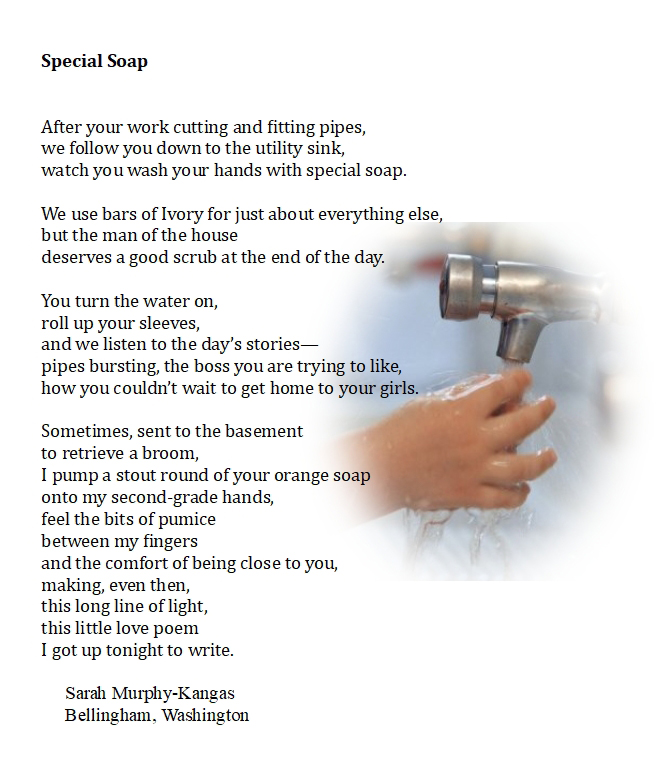
Special Soap
Bellingham, Washington is a hotbed of poetry judging by the quality of the submissions Third Wednesday receives from there. We almost always find something worthy of publication. This one, by Sarah Murphy-Kangas, is a prime example. It’s Third Wednesday’s poem of the week.
The Nightjar
In the U.S. we call them nighthawks but in much of the world they’re known as nightjars. African poet, Kim Ottavi, who now lives in France, writes about the nightjars of home. Here is the poem of the week from Third Wednesday Magazine.

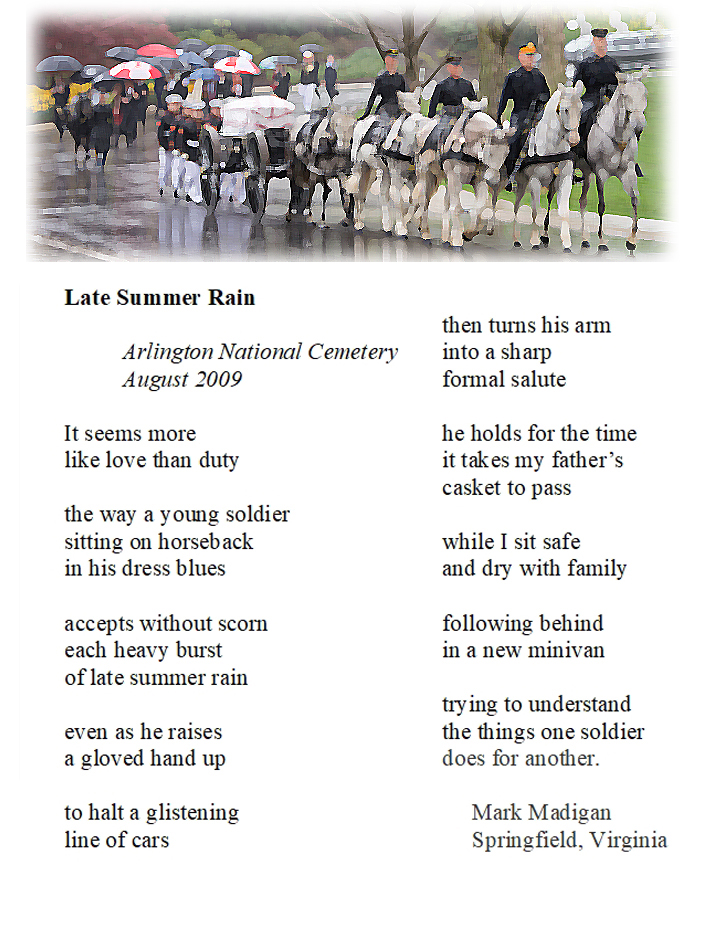
Late Summer Rain
Our poem of the week was a winning poem in Third Wednesday’s most recent “One Sentence Poetry Contest”. This is the second win for Virginia poet, Mark Madigan.
The newest iteration of this popular contest is open for entries until April 15, 2019.
I Have No Thoughts of Cosmological Matters – Our Poem of the Week
This week’s poem is a Triolet from M. B. Powell, a Washington poet who has three tiolets in the winter issue of Third Wednesday. The poet’s chapbook, Lovers, Mothers, Killers, Others is published by Finishing Line Press, 2013.
tri·o·let
/ˈtrēələt/
noun
A poem of eight lines, rhyming abaaabab and so structured that the first line recurs as the fourth and seventh and the second as the eighth.
Photo credit: NASA Hubble Telescope

Tip For Writers
Use vs. Utilize
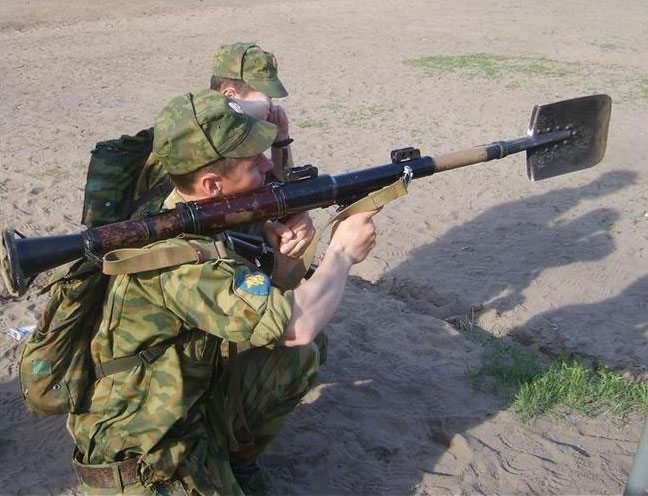
Most people, judging by the number of times I see them misused, don’t know that utilize and use have different meanings. They are not interchangeable. You use an object for a purpose common to that object, while you might utilize an object for a purpose not common to that object. For instance you use a pen to write, but you might utilize a pen to perform an emergency tracheotomy. You would use a dime to pay for a gumball but you might utilize a dime to tighten or loosen a screw.
Soldiers use a shovel: Soldiers utilize a shovel:

The Birds of Morris Graves
Our poem of the week is an ekphrastic based on the body of work of the Northwest artist, Morris Graves (1910-2001). The background image is “Spirit Bird”. This poem appeared first in the Spring 2017 issue of Third Wednesday and was later reprinted in The Ekphrastic Review. (Disclaimer – the poem’s author is one of our editors).


