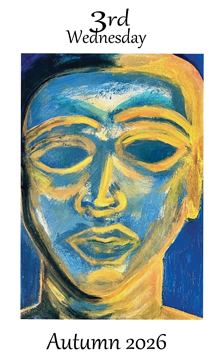
The Autumn issue of 3rd Wednesday is now available as a free download and in print from Amazon.com. Contributor and Subscriber copies are in the mail.
The Autumn issue of 3rd Wednesday is now available as a free download and in print from Amazon.com. Contributor and Subscriber copies are in the mail.

Print copies are in the mail, and the free PDF edition is now available on our website.

Print copies are in the mail, and the free PDF edition is now available on our website. Just click the cover image.
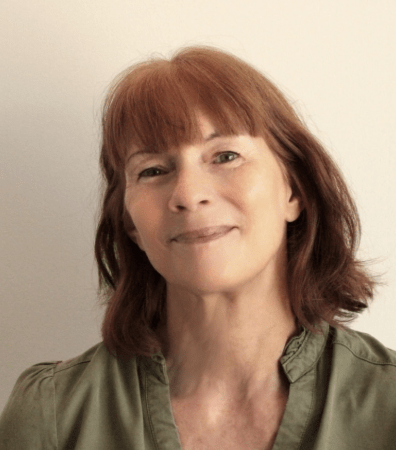
Isabelle Audiger is a 62 year-old, published or self-published poetry and fiction writer, born in Normandy, France. In a previous life, she taught French and English in Canada, the UK, as well as France. Since 2011, she’s been writing, consistently and stubbornly, poetry, youth or adult novels together with short-stories, in French or in English.
https://linktr.ee/isabelleaudiger
You learn to apologize before the water reaches the steps.
It’s a small skill at first: a tightening in the chest when someone else’s voice sharpens, a preemptive softness in your tone. You say I’m sorry, the way other people check the weather—automatic, preventative. You watch for changes in barometric pressure inside the house. You can feel it in the hinge of a door, in the way a cabinet closes too hard, in the pause before someone exhales.
Read More…(PDF)
Lauren Kelley is a writer of flash fiction and creative nonfiction. Her work explores inheritance, place, and the quiet systems people learn to survive inside. She lives in Minnesota, where she writes and tends a small, unruly collection of animals. More of her work can be found at unreliableonpurpose.com.
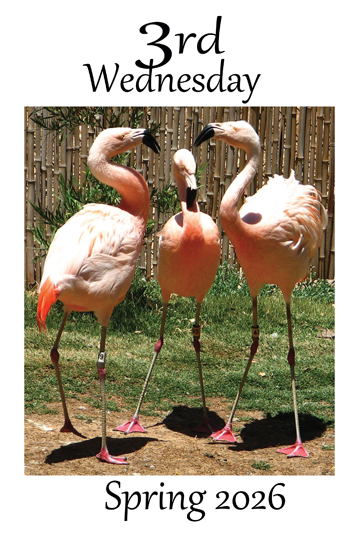
The spring issue of 3rd Wednesday is available for free download at our website. This issue includes winning poems and honorable mentions from our annual poetry contest.
I was 135. Then 125. Then 99. My big sister graduated and left for college. Ma said it from the sink—hands wet, eyes down: You’ll join her in two years.
Ma dressed me in my sister’s old clothes. Sleeves that swallowed my wrists. Cuffs worn soft where her fingers had worried them. I made Ma pack my sister’s usual lunch for me. At school, I dismantled it. Bread, cheese, ham, bread. The ham came off in a damp sheet. The cheese left a pale sweat on my fingertips. Her homemade cupcake—whipped peaks, chocolate curls—something I couldn’t separate without ruining.
A thick binder waited on my desk, rings yawning. The papers inside had my sister’s cursive in the margins. I pressed my pencil until the lead snapped. I reached for the eraser again.

Kimmy Chang is a Texas-based writer and computer-vision engineer. A 2026 Writers’ League of Texas Fellow and Pushcart Prize nominee, her work has appeared or is forthcoming in trampset, ONE ART, and Sky Island Journal, among others. Read more at https://www.kchang.xyz/.
Charlotte Collins sits cross-legged on a mat in a meditation room at Santosa Springs, a wellness retreat tucked in the misty Berkshire Mountains. Kel the guru is cute—Charlotte’s age, thirty, give or take—the type of guy Charlotte would have loved in her twenties, an enlightened, touchy-feely feminist in the body of a mountain biker, but those guys wanted to know her, wanted to look into her eyes and understand how she was feeling. Charlotte had no interest in swimming in the deep end of that pool.
“There’s a difference between chest and belly breathing,” Kel says. His biceps wink from his fitted hemp T-shirt.
Charlotte raises her hand, feeling her ponytail dance on her shoulders. “Breathing doesn’t usually work for me. I’ve tried, but it makes me more stressed.”
Charlotte’s inability to breathe is why her boss, Diana, VP of Commodities at JP Morgan, called her into her office. “Have you seen that PSA? Khakis and golf shirt type of guy, but then he starts fentanyl, and his face turns ashen and his skin becomes thin as cellophane.”
Jennifer Handford is a former high-school literature and composition teacher and is currently an MFA student in creative writing at George Mason University.