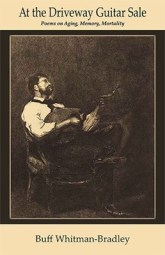
 Third Wednesday contributor Buff Whitman-Bradley’s new book, At the Driveway Guitar Sale: Poems on Aging, Memory, Mortality, is available from Main Street Rag Publishing Company. A few of the poems in the book were originally published in Third Wednesday. He podcasts at thirdactpoems.podbean.com

Click the YouTube link for a video of Buff reading from his book.
At the Driveway Guitar Sale can be puchased from Main Street Rag.
I’ve read this author in many publications over the years, and listened to his own gently cadenced readings on his podcast, and I love his poetry. Wit, imagination, a perfect ear, and an effortless touch (not to mention knee-slapping punchlines) mark all of Whitman-Bradley’s work, and the poems in this book are no different. The poet is forgivingly and unforgivingly self-aware, somehow finding all the poetry in life’s least poetic moments. ~Roger Stoll, essayist and poet
For all of us, even though we may continue to climb stairs and eat our vegetables, the ever-expanding past continues to nip at our heels. Buff Whitman-Bradley reminds us in these poems that we are not alone, that we participate in a common project with its pitfalls and distractions. He calls attention to the gifts and graces that accompany a seasoned perspective, and that there is a special liveliness and wise humor that comes with age that is both balm and elixir. ~Gary Crounse
With his signature grace and economy, Buff Whitman-Bradley tackles the unimaginable; the body’s elemental breakdown and the proverbial leap into the unknown which awaits us all. Never settling for abstraction or platitude, these poems are as rugged and beautiful as the California landscapes humming in the background. And though he may have given up on his plan ‘to be an ancient Chinese poet’, something of their wild humor and gem-like clarity shines on every page. ~Seth Jani, Publisher and Editor of Seven CirclePress, Author of Night Fable
Tidy up
 A Zen master of my acquaintance
Once said that when he died
He wished to leave no trace.
All the backpackers I know
Say the same
About their sojourns in the wild.
No messes, no unfinished business.
It’s a good idea to tidy up
Before all of our little departures
And our impending Big One –
Douse the coals, strew the ashes,
Bag any food scraps,
Bits of paper, foil and cardboard,
Erase all footprints,
Be forthright, apologize, forgive –
So that what remains of us in memory
Is not a squalid little campsite
Full of trash and debris
And tangled disputes
That will cause great consternation
Or anguish
To those left behind,
But is instead
An expanse of mountain grasses
Beside a high cold tarn
Where ones who loved us
Might like to pass a little time,
Pitch a tent,
Build a fire.
 Paperback: 58 pages
 Paul Bernstein is a self-taught poet who began writing seriously after a varied career as a library worker/weekend hippie, anti-war activist, radical journalist, medical editor, and managing editor. His work now appears regularly in journals and anthologies. He is also a prizewinning amateur country music lyricist and a published photographer. Recent work has appeared or is forthcoming in Front Porch Review, Muddy River Poetry Review, New Plains Review, Third Wednesday, and U.S. 1 Worksheets. Paul currently lives in Ann Arbor, Michigan. He suffers from an addiction to Michigan sports contracted as an undergraduate but is otherwise functional.
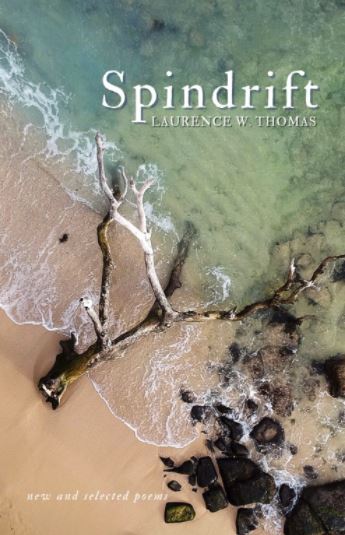 Spindrift suggests stuff blown onto beaches, beaches of discovery in one’s mind. When these poems show a squirrel, a fish, birds, a beggar, an Irish pub, or a dish we see these as metaphors which conjure up ideas or feelings from our own familiarity with them. A poem that begins as an abstraction, like an enemy or peace or patience, becomes objectified. Spindrift is comprised of whatever little gems might be found along the shore, examined closely to become part of the reader’s experience. These jottings of spindrift take off from that experience like going to an airport when you want to be someplace else – or like poems which say one thing when they mean another.
 Laurence W. Thomas is the founding editor of
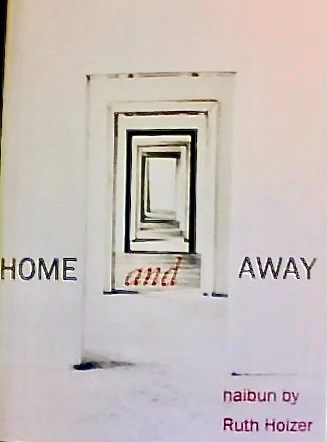 Home and Away
  Bio: Ruth Holzer is the author of five previous chapbooks, most recently,
 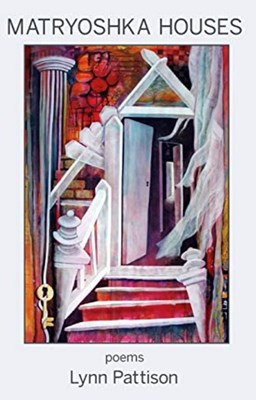 R
R Lynn Pattison’s work appeared, most recently, at Ruminate and Moon City Review. It has also appeared in Smartish Pace, Pinyon, The Notre Dame Review, Mom Egg Review and elsewhere. Previous collections include : tesla’s daughter (March St. Press); Walking Back the Cat (Bright Hill Press) and Light That Sounds Like Breaking (Mayapple Press).

 The Wild Severance delivers on its title. Pelicans, crows, gulls, fireflies, robins, cardinals, bluejays fly from its pages messaging time, illuminating our lives “in the falling darkness.” But it’s not only the natural world this poet loves: he writes of literary and mythological figures, elevating them to existence with language. There are people to remember, too: where a second child fits; how coffee brings a mother and father back from memory; present-day family encounters, “while I watch from my chair I see five generations.” This is a book rich with what is true and what lasts; V.P. Loggins makes us believe that there’s sanctity enough in this cold world to make poetry that honors the glorious.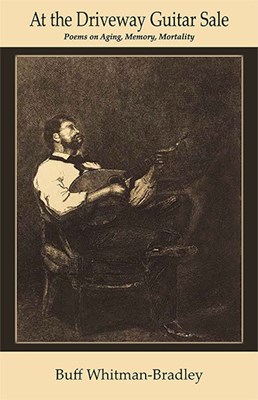
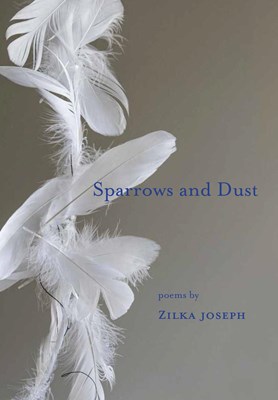 Is this the bird way? Where is home? What is the fate of wanderers? Have we all been “elsewhere”? Will truths be revealed to us in the end? In this finely tuned chapbook, the poet uses free verse and form to sing her stories, her history, her geography, her experience as an immigrant who finds rest after loss and upheaval with imagination and passion. With deft use of imagery, language and the senses, she travels and shape-shifts. She weaves in science, mysticism, imagination and myth. We fly from India to Michigan and back, from this world to other in-between states where memory, death, loss, the present, the search for home and the self all sing through several voices, and become a miniature symphony. As Attar tells us through his bird characters in his allegorical rendering of Sufism— “the way is long” so we must persevere to find the truth. We are but “water mixed with dust”. The bird-soul can only rest briefly, then it must move on.
 Zilka Joseph is an educator, editor and a widely published poet. Her chapbooks, Lands I Live In and What Dread, were nominated for a PEN America and a Pushcart award respectively. Her book Sharp Blue Search of Flame (WSUP) and was a finalist for the Foreword INDIES Book Award.
  “A stunning collection of unique and eclectic observations of modern love which I’m sure Shakespeare himself would be pleased to see is ‘holding a mirror up to life.’ If Wes Anderson and Miranda July had a Queer love-child, they’d write like this.”
 Third Wednesday Magazine