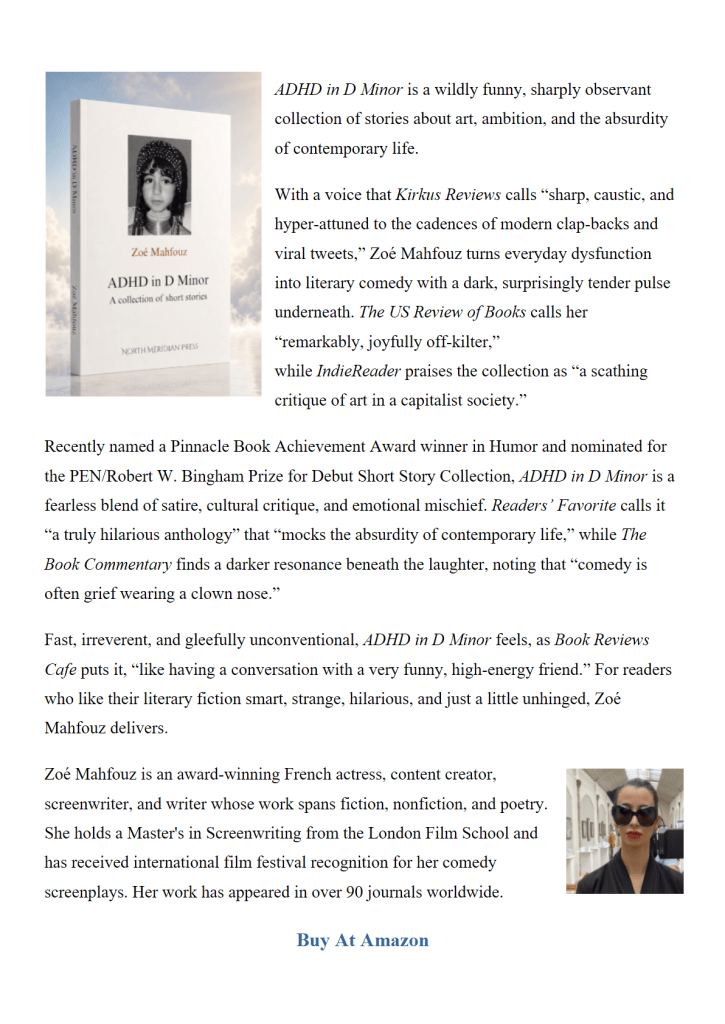
ADHD in D Minor / Zoé Mahfouz

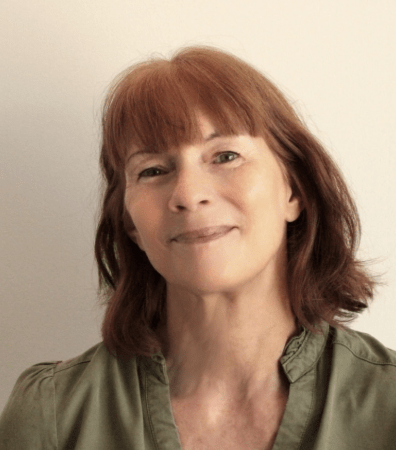
Isabelle Audiger is a 62 year-old, published or self-published poetry and fiction writer, born in Normandy, France. In a previous life, she taught French and English in Canada, the UK, as well as France. Since 2011, she’s been writing, consistently and stubbornly, poetry, youth or adult novels together with short-stories, in French or in English.
https://linktr.ee/isabelleaudiger
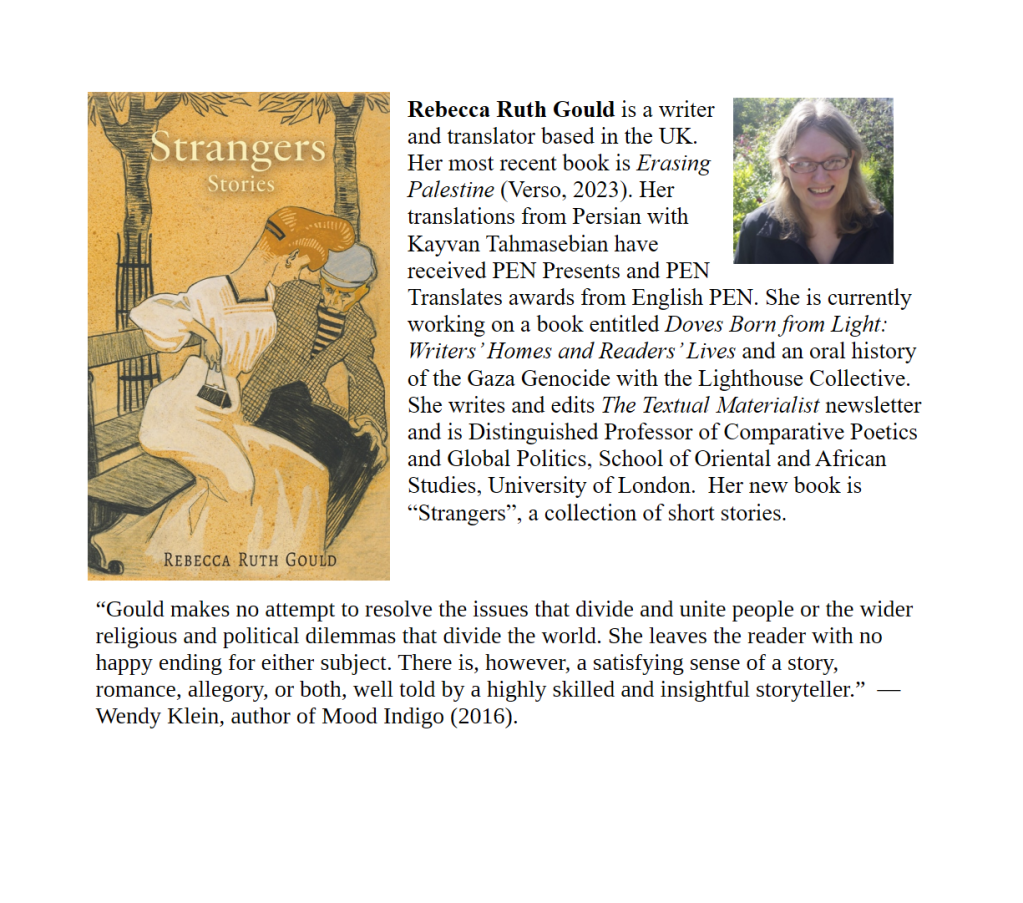
| Publisher | Serving House Books |
| Publish Date | December 21, 2025 |
| Pages | 166 |
| Language | English |
| Type |  Paperback Paperback |
| EAN/UPC | 9781947175839 |
| Dimensions | 8.0 X 5.0 X 0.4 inches | 0.4 pounds |
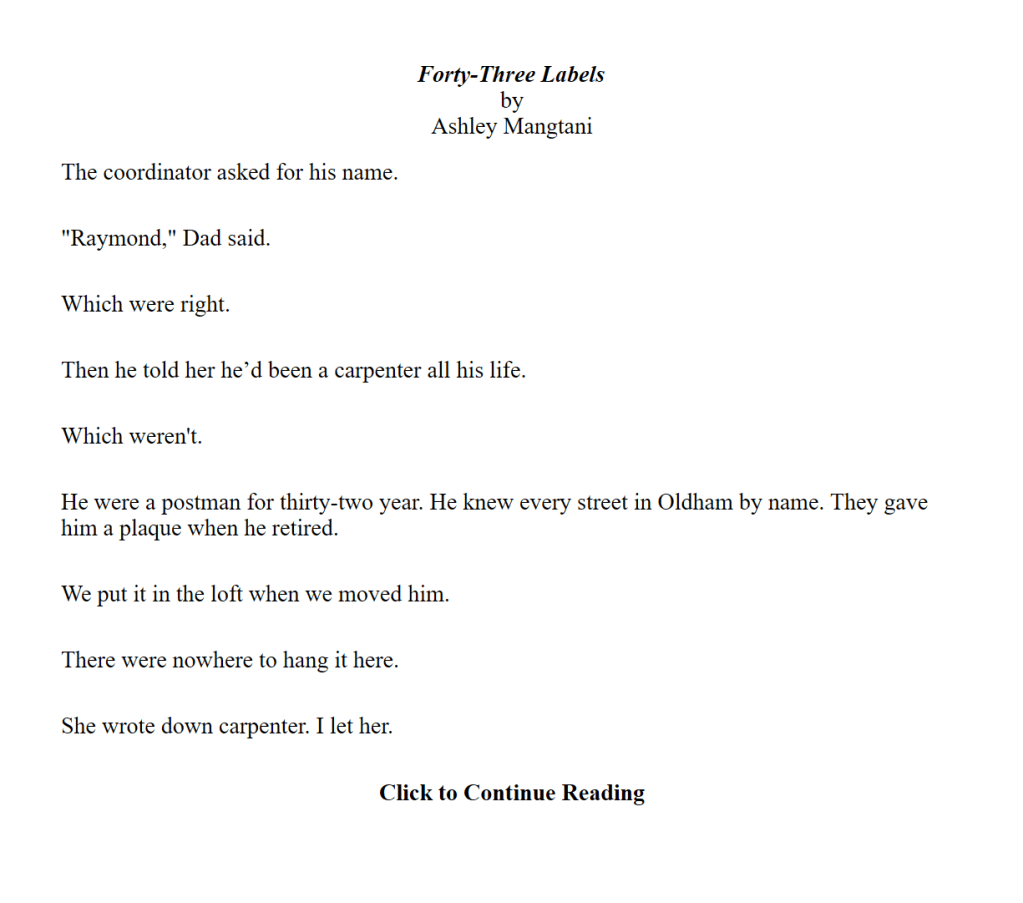
You learn to apologize before the water reaches the steps.
It’s a small skill at first: a tightening in the chest when someone else’s voice sharpens, a preemptive softness in your tone. You say I’m sorry, the way other people check the weather—automatic, preventative. You watch for changes in barometric pressure inside the house. You can feel it in the hinge of a door, in the way a cabinet closes too hard, in the pause before someone exhales.
Read More…(PDF)
Lauren Kelley is a writer of flash fiction and creative nonfiction. Her work explores inheritance, place, and the quiet systems people learn to survive inside. She lives in Minnesota, where she writes and tends a small, unruly collection of animals. More of her work can be found at unreliableonpurpose.com.
I was 135. Then 125. Then 99. My big sister graduated and left for college. Ma said it from the sink—hands wet, eyes down: You’ll join her in two years.
Ma dressed me in my sister’s old clothes. Sleeves that swallowed my wrists. Cuffs worn soft where her fingers had worried them. I made Ma pack my sister’s usual lunch for me. At school, I dismantled it. Bread, cheese, ham, bread. The ham came off in a damp sheet. The cheese left a pale sweat on my fingertips. Her homemade cupcake—whipped peaks, chocolate curls—something I couldn’t separate without ruining.
A thick binder waited on my desk, rings yawning. The papers inside had my sister’s cursive in the margins. I pressed my pencil until the lead snapped. I reached for the eraser again.

Kimmy Chang is a Texas-based writer and computer-vision engineer. A 2026 Writers’ League of Texas Fellow and Pushcart Prize nominee, her work has appeared or is forthcoming in trampset, ONE ART, and Sky Island Journal, among others. Read more at https://www.kchang.xyz/.
Charlotte Collins sits cross-legged on a mat in a meditation room at Santosa Springs, a wellness retreat tucked in the misty Berkshire Mountains. Kel the guru is cute—Charlotte’s age, thirty, give or take—the type of guy Charlotte would have loved in her twenties, an enlightened, touchy-feely feminist in the body of a mountain biker, but those guys wanted to know her, wanted to look into her eyes and understand how she was feeling. Charlotte had no interest in swimming in the deep end of that pool.
“There’s a difference between chest and belly breathing,” Kel says. His biceps wink from his fitted hemp T-shirt.
Charlotte raises her hand, feeling her ponytail dance on her shoulders. “Breathing doesn’t usually work for me. I’ve tried, but it makes me more stressed.”
Charlotte’s inability to breathe is why her boss, Diana, VP of Commodities at JP Morgan, called her into her office. “Have you seen that PSA? Khakis and golf shirt type of guy, but then he starts fentanyl, and his face turns ashen and his skin becomes thin as cellophane.”
Jennifer Handford is a former high-school literature and composition teacher and is currently an MFA student in creative writing at George Mason University.
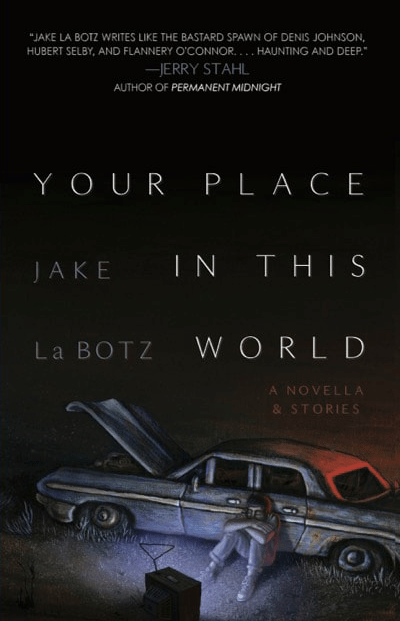
Jake La Botz writes like the bastard spawn of Denis Johnson, Hubert Selby, and Flannery O’Connor. His prose is as haunting and deep as the dark, beautiful, twisted heart of life itself. Your Place in This World is the kind of book you don’t just read, you stop people in the street and tell them they have to read. It’s that kind of good. I loved these stories.
—JERRY STAHL author of Permanent Midnight
La Botz’s dialogue is fierce and kinetic, revealing the back-alley wounds of survival that bloom beneath our skin. He ferries us through Chicago streets with the precision of someone who’s lived every note, every scar, every song. This collection vividly depicts the pulse of finding ourselves through the grit and end- less noise. Get a copy of this brilliant beauty, pronto. Sublime!
—MEG TUITE author of Planked by the Abyss
Jake La Botz’s Your Place in This World has an emotional depth and street-smart verisimilitude reminiscent of works from writ- ers like Saul Bellow, a gestalt of characters on the outs but still moving, still searching for meaning in a changing world. This book announces the arrival of a gifted new voice—a writer whose lyrical sensibility is eerily reminiscent of Kerouac and who understands how the convergence of place, personality, and circumstance can shape lives and destinies. An absolute feat of a debut.
—DANIEL PEÑA author of Bang: A Novel
Jake La Botz’s Your Place in This World is a vibrant and delightful ride through a ramshackle realm occupied by addicts and winos, truants and grifters, cheaters, dreamers, chumps, and bluesmen. This world’s denizens are hungry, urgent, funny, flawed, broken, resilient, and deeply human. In other words, they are us. Their dreams, schemes, and desires will resonate with readers who have at times felt marginalized or misunderstood. In this world there might not be redemption or even luck—just the reality of your existence, the prospect of a new day, and the sublime com- edy of life as you shuffle through the liminal spaces along the fringes of society, maybe, just maybe finding your place.
—LOUIS GREENSTEIN author of The Song of Life
In a collection that is understated and emotionally stunning, Jake La Botz explores the ache and beauty of the dispossessed. He evokes the grit of Chicago, and landscapes beyond, as his characters search for a way to belong. The tonal variations in these stories–from gritty to humorous to magically realistic–– are united by the leitmotif of flawed fathering, which gives a heartfelt and resonant undercurrent to this kaleidoscopic collec- tion. In the titular novella, the protagonist, like Joyce’s Stephen Dedalus, seeks a father figure to guide him, and finds a mentor in a bluesman who is both blessed and cursed by his ability to give voice to those who have passed on. La Botz’s searing details and ear for the longings of our imperfect lives create a collection of stories that shimmer against the dark world they illuminate.
—ELIZABETH ONESS author of The Hopefuls
***
A quirky Chicago kid raised by his junkie dad stumbles upon an unusual Maxwell Street bluesman; a Twelve-Step wannabe swaps addictions to match the support groups that meet in his favorite recovery room; a case of mistaken identity shines a bright light on a city-dweller’s dark past; a self-help seeking couple discover the help is more maddening than their “issues”; a tchotchke thief is overtaken by a force inside a stolen object. What does it mean to find your place in this world? Jake La Botz burrows his way deep into the challenges of revelation, showing how change can bless us and curse us, and ultimately save us.
Your Place in This World can be purchased at: https://www3.uwsp.edu/english/cornerstone/Pages/BOOKS.aspx
See a recorded reading from Jake’s new book on
3rd Wednesday’s YouTube channel:
https://youtu.be/cftvjZlbpWo