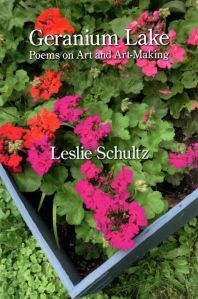
 Named for a bold pink pigment that fades over time, Leslie Schultz’s vibrant collection Geranium Lake is an ekphrastic extravaganza as well as a meditation on age, time, and beauty. Schultz’s refreshing curiosity is evident as she engages with individual works of art and with larger issues of looking, curation, and display. Schultz’s eye for quirky details and her ear for playful sounds reminds me of that other great ekphrastic poet, Marianne Moore. “I know the struggle to make one / thing true,” reminding us that making art—and making a life—is a long process with endless twists and turns: “for each new page, dozens crumpled and torn.” For Schultz, the process is the point. Geranium Lake teaches us what it means to live a life devoted to apprehending, and making, beauty. This is one collection that won’t lose its luster no matter how much time passes.
—Melissa Range, author of Horse and Rider and Scriptorium
Art is where I find meaning, enjoyment, and a sense of accomplishment. Art expresses the depths and insights of life. I work primarily as a poet and photographer but also as a writer of fiction and essay.
—Leslie Schultz
https://winonamedia.net/
Geranium Lake: Poems on Art and Art-Making by Leslie Schultz
Kelsay Books, 2024
Available now from Kelsay Books and on Amazon.com
 How does before become after? What happens to our dreams? Our disappointments? These stunning poems in Bright Soil, Dark Sun interrogate time and present moments of excavation, of tracing—and sometimes slipping into—the echoes and scars into which we wake each day, “the world and what haunts / beneath it blending in / bitter harmony.” How much of the past—our own or that of others—can we truly understand? And what is the cost of that understanding? Samuel Franklin explores these corporeal labyrinths and lets each poem reveal its own distinct thread. To quote one of his speakers, I am glad “I was there to see its glint.”
  Samuel Franklin is the author of two books of poetry:
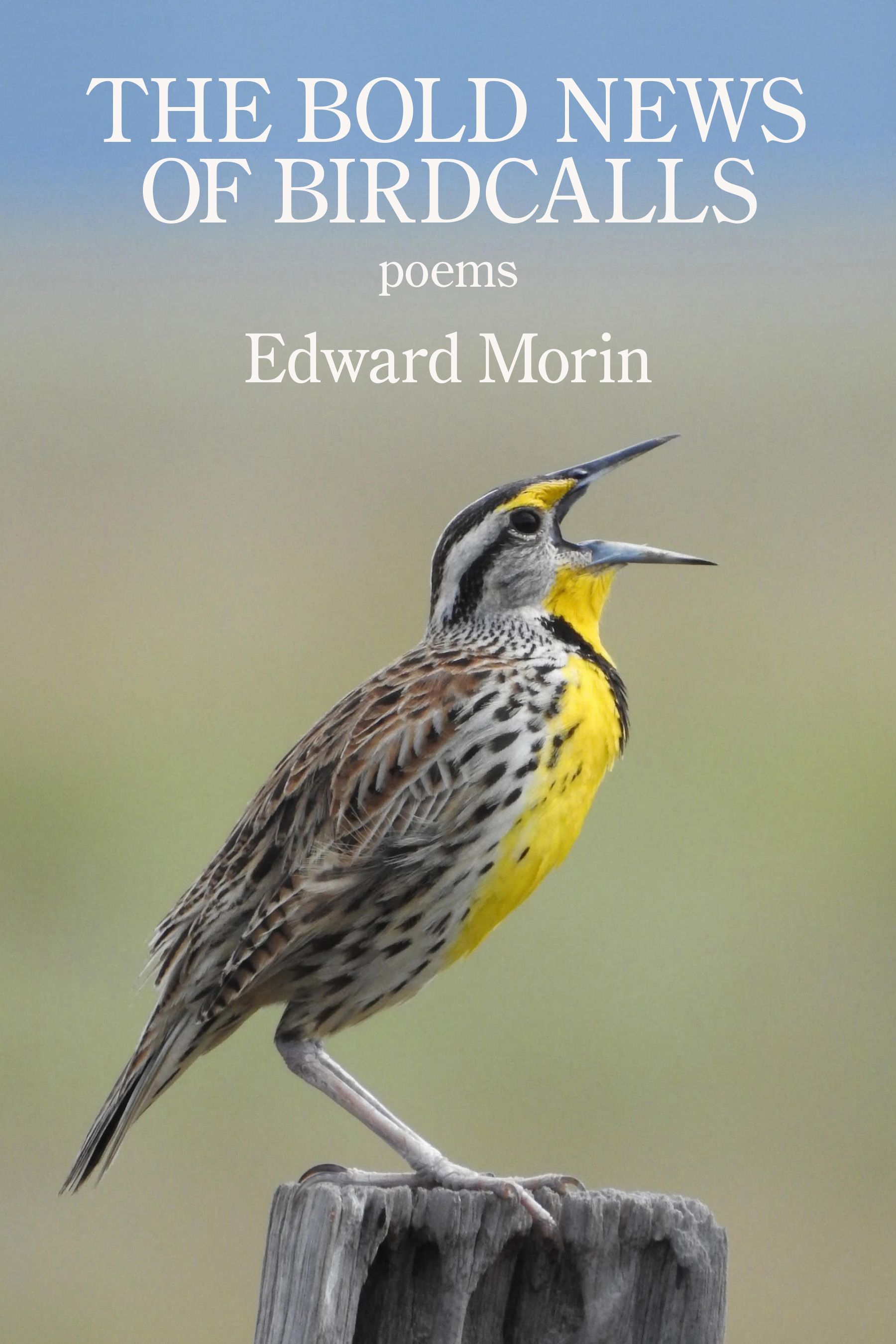 The meadowlark, belting his song from a post on this book’s cover, is recognized across the country as a harbinger of spring. Enlivening the ambiance of this poetry collection, familiar birds represent the character and mood of its four sections: noisy jays, melodious wrens, steadfast robins, tranquil swans. While birds populate many of the poems, hardly more than a handful have birds as their subjects. The poems’ subjects derive from wide ranging personal experiences often narrated as dramatic situations, usually with something emotionally important at stake. Settings are urban and rural, delineated in finely tuned sensuous detail. Some poems are sonorously lyrical, others ironic or assertive.
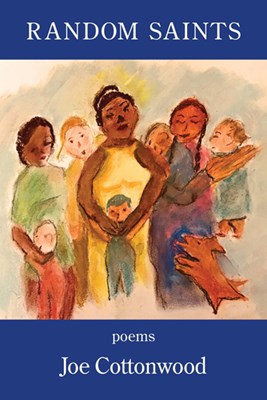 Random Saints
 Joe Cottonwood
 Third Wednesday Magazine