 Room by room and roof by roof, the poems of Lynn Pattison’s Matryoshka Houses open up those dwellings in which the speaker has lived, and lost, and loved, where the soup contains everything from hard knocks and thorns to the divorce decree, and rooms are “flooded pink with sun through the crabapple.” These are poems that have emerged from a life not only fully lived, but fully seen. The world, here, comes in through the eyes and is sifted through the imagination: “Wide white wings / bloom from either side” of a plow blade, she writes, “as if some/commanding angel sweeps across / the prairie in moonlight delirium.” Pattison’s is a worthy voice to guide us through these disorderly, “illogical days,” this “understory world,” where still the houses of memory sing, in “Calls that reached to the pasture / if they had to”—Here I am.
—Diane Seuss, author of Four-Legged Girl and Still Life with Two Dead Peacocks and a Girl
Lynn Pattison writes, “Here,” the house sings, “Here I am.” In Matryoshka Houses, she deftly explores how her homes have served not only as vessels for loved ones and the tangle of objects a family accumulates—like records playing on a Victrola and jewelry boxes decorated with dancers—but are also containers for deep emotions and memories. In these graceful poems, she blends her many houses together seamlessly, until, distilled, they become the essence of home, which stands, “steadfast / no matter the weather,” and to which she returns, again and again.
—Kathleen McGookey, author of Instructions for My Impster
Time collapses in this wistful and shimmering collection by Lynn Pattison, in which all the rooms and houses her speaker has lived in become layered like double exposures, a palimpsest, nested Matryoshka dolls. Whether lived in for days, like a hotel room in Cancun that becomes home to a seasick tourist; or decades, like the family homestead where “my father / remembers his father setting logs at dawn,” these lost homes and their furnishings take on mythic significance, resonating with the reader’s own memories. Easily read in one sitting, this chapbook is an ideal introduction to Pattison’s fine work.
—Julie Kane, former Louisiana Poet Laureate and author of Mothers of Ireland
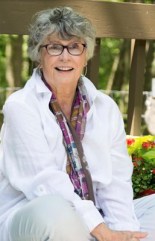 Lynn Pattison’s work appeared, most recently, at Ruminate and Moon City Review. It has also appeared in Smartish Pace, Pinyon, The Notre Dame Review, Mom Egg Review and elsewhere. Previous collections include : tesla’s daughter (March St. Press); Walking Back the Cat (Bright Hill Press) and Light That Sounds Like Breaking (Mayapple Press).
Lynn Pattison’s chapbook, Matryoshka Houses, debuted June, 2020 from Kelsay Press. It can be ordered from the Press or purchased from Amazon or Kelsay Books.


 The Wild Severance delivers on its title. Pelicans, crows, gulls, fireflies, robins, cardinals, bluejays fly from its pages messaging time, illuminating our lives “in the falling darkness.” But it’s not only the natural world this poet loves: he writes of literary and mythological figures, elevating them to existence with language. There are people to remember, too: where a second child fits; how coffee brings a mother and father back from memory; present-day family encounters, “while I watch from my chair I see five generations.” This is a book rich with what is true and what lasts; V.P. Loggins makes us believe that there’s sanctity enough in this cold world to make poetry that honors the glorious.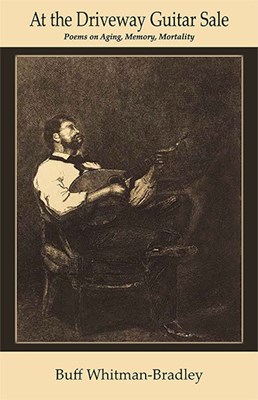
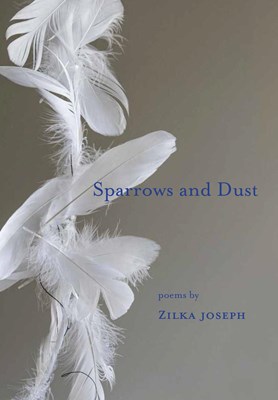 Is this the bird way? Where is home? What is the fate of wanderers? Have we all been “elsewhere”? Will truths be revealed to us in the end? In this finely tuned chapbook, the poet uses free verse and form to sing her stories, her history, her geography, her experience as an immigrant who finds rest after loss and upheaval with imagination and passion. With deft use of imagery, language and the senses, she travels and shape-shifts. She weaves in science, mysticism, imagination and myth. We fly from India to Michigan and back, from this world to other in-between states where memory, death, loss, the present, the search for home and the self all sing through several voices, and become a miniature symphony. As Attar tells us through his bird characters in his allegorical rendering of Sufism— “the way is long” so we must persevere to find the truth. We are but “water mixed with dust”. The bird-soul can only rest briefly, then it must move on.
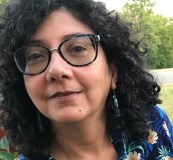 Zilka Joseph is an educator, editor and a widely published poet. Her chapbooks, Lands I Live In and What Dread, were nominated for a PEN America and a Pushcart award respectively. Her book Sharp Blue Search of Flame (WSUP) and was a finalist for the Foreword INDIES Book Award.
  “A stunning collection of unique and eclectic observations of modern love which I’m sure Shakespeare himself would be pleased to see is ‘holding a mirror up to life.’ If Wes Anderson and Miranda July had a Queer love-child, they’d write like this.”
 Here’s everything you want in poetry. Understandable language—check. Interesting, inventive use of words—check. Topics that reference matters of common interest—check. Insights way beyond the usual—check. Don’t skim this collection. You’d miss way too much that makes our lives meaningful. Enter and walk “unafraid in this new topography.”
 Shutta Crum’s poems are in Typehouse, Stoneboat, Southern Poetry Review, Beyond Words and 3rd Wednesday. Forthcoming: Main Street Rag. She was nominated for a Pushcart Prize by Typehouse. When You Get Here (2020) won a gold Royal Palm Literary Award. For more info or to book as a speaker:
 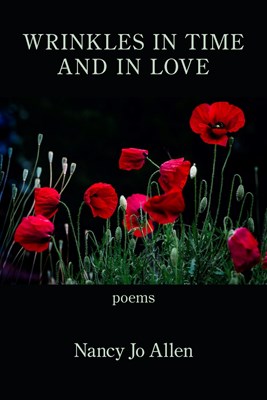 Nancy Jo Allen proudly announces the release (March 20, 2021) of her first collection of poetry through her publisher
 “Robert Lowes addresses with wit and compassion topics we recognize: the body’s betrayals, unfulfilled desires, nostalgia, loss. Lowes’s love of words is apparent in his masterful soundwork and the equal skill with which he depicts the delicate beauty of a butterfly or slams home a devastating judgment on our human failings. A wide-ranging cast of characters wanders through these poems: a woman who keeps chickens, a Neanderthal buying an ax, a man with a fresh haircut, God.

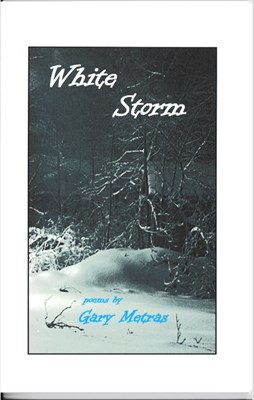
 Gary Metras’s new book of poetry is
 Third Wednesday Magazine