 “Robert Lowes addresses with wit and compassion topics we recognize: the body’s betrayals, unfulfilled desires, nostalgia, loss. Lowes’s love of words is apparent in his masterful soundwork and the equal skill with which he depicts the delicate beauty of a butterfly or slams home a devastating judgment on our human failings. A wide-ranging cast of characters wanders through these poems: a woman who keeps chickens, a Neanderthal buying an ax, a man with a fresh haircut, God. An Honest Hunger opens to us a world that is humorous and deeply serious, filled with signs and wonders, mischief and memories, unanswerable questions and unexpected redemptions–our world, the whole, sweet ‘slapstick ballet.'”
–Marjorie Stelmach, author of Walking the Mist and Falter
“If more poets wrote like Robert Lowes, more people would read poetry. In An Honest Hunger, his debut collection, Lowes never holds the reader at a distance. Here, the poet speaks with straightforward intelligence and acumen–and a pitch-perfect natural friendliness–without a scintilla of sentimentality. And his imagery is sublime. . . . An Honest Hunger appeals to humanity’s better self and reminds us that we are united not so much by our strengths as by our woundedness.”
–Robert Nazarene, Editor-in-Chief, The American Journal of Poetry, author of Empire de la Mort
“In poems that range from elegiac to exuberant, Robert Lowes’s An Honest Hunger is a joyful dance with everyday life. It is a book full of faith and doubt, anger and suffering, but one still laugh-out-loud funny. Lowes’s hunger for God, for meaning in life, makes this book the one to read now, when this hunger is more universal and pressing than ever.”
–Jesse Lee Kercheval, author of America that island off the coast of France, professor of English at the University of Wisconsin-Madison.

 An Honest Hunger by Robert Lowes was published by Resource Publications, an imprint of Wipf & Stock Publishers, in April 2020. It’s avialable now from Amazon and Barnes and Noble.
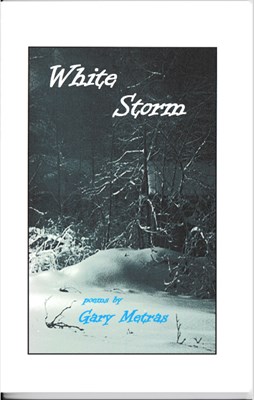
 Gary Metras’s new book of poetry is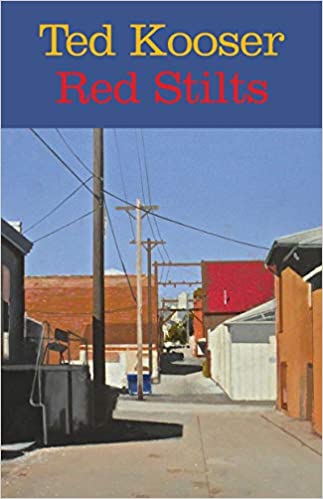
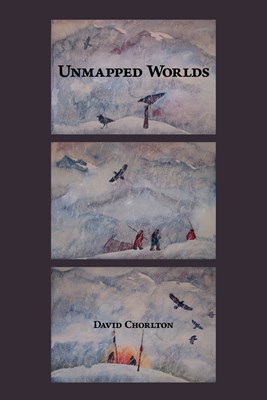 The Unmapped Worlds in this book extend from history to a way of life centered on European villages to the marginally surreal experience of our own times. The poems are previously uncollected ones enjoying their rediscovery. Whether through the visions of a medieval mystic or the routines that defined existence in a small town on the free world’s edge, David Chorlton reaches for what brought the mind to life in the course of living from day to day. The desert emerges as it appeared to early missionaries and conquerors in the Southwest and comes to bear multiple cultures today. Writing is a journey to the poet, and the work here follows some occasionally surprising side roads for Chorlton.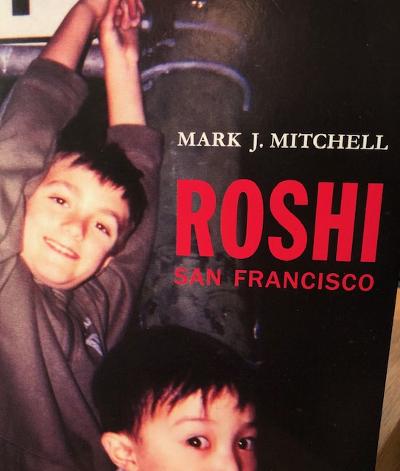

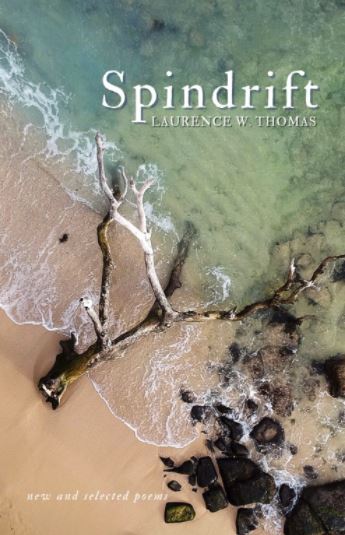 Spindrift suggests stuff blown onto beaches, beaches of discovery in one’s mind. When these poems show a squirrel, a fish, birds, a beggar, an Irish pub, or a dish we see these as metaphors which conjure up ideas or feelings from our own familiarity with them. A poem that begins as an abstraction, like an enemy or peace or patience, becomes objectified. Spindrift is comprised of whatever little gems might be found along the shore, examined closely to become part of the reader’s experience. These jottings of spindrift take off from that experience like going to an airport when you want to be someplace else – or like poems which say one thing when they mean another.
 Laurence W. Thomas is the founding editor of
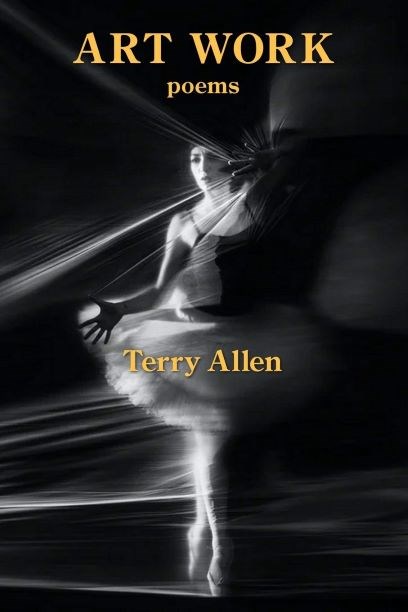 Art Work
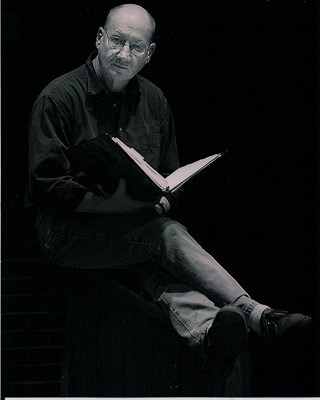 Terry Allen was born in Brisbane, Australia. He is emeritus professor at the University of Wisconsin-Eau Claire, where he taught theatre arts. His poems have appeared in numerous journals and he is the author of the chapbook, Monsters in the Rain. He lives in Columbia, Missouri with his wife Nancy.
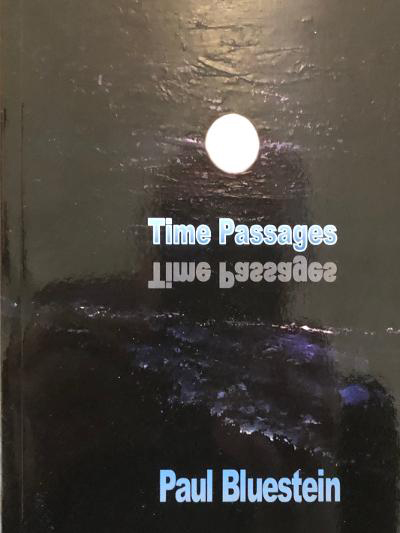 “Paul Bluestein opens this fresh and vibrant collection of poems with a brief set of seasonal poems sectioned into Autumn, Winter, Spring and Summer. He then slides eloquently into the heart and soul of time passages where his deep love for his dogs, his wife and nature are painted in gentle tapestries and spoken with sincerity, warmth and spirit.”
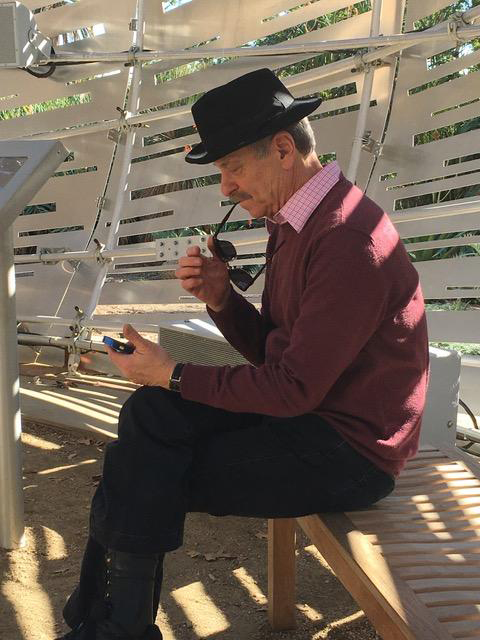 Paul Bluestein is an obstetrician and blues guitar player and writer who lives in Connecticut with his wife and Tucker, an unreasonably demanding rescue dog. His work has appeared in The Broken Plate, The Linden Avenue Literary Review, Third Wednesday, El Portal and Penumbra among other publications. His first full-length collection, Time Passages, was published by Silver Bow Publishing. Avialable at Amazon.com.
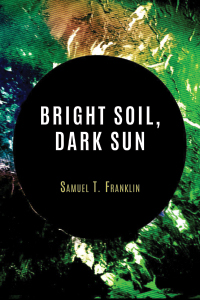 How does before become after? What happens to our dreams? Our disappointments? These stunning poems in Bright Soil, Dark Sun interrogate time and present moments of excavation, of tracing—and sometimes slipping into—the echoes and scars into which we wake each day, “the world and what haunts / beneath it blending in / bitter harmony.” How much of the past—our own or that of others—can we truly understand? And what is the cost of that understanding? Samuel Franklin explores these corporeal labyrinths and lets each poem reveal its own distinct thread. To quote one of his speakers, I am glad “I was there to see its glint.”
  Samuel Franklin is the author of two books of poetry:
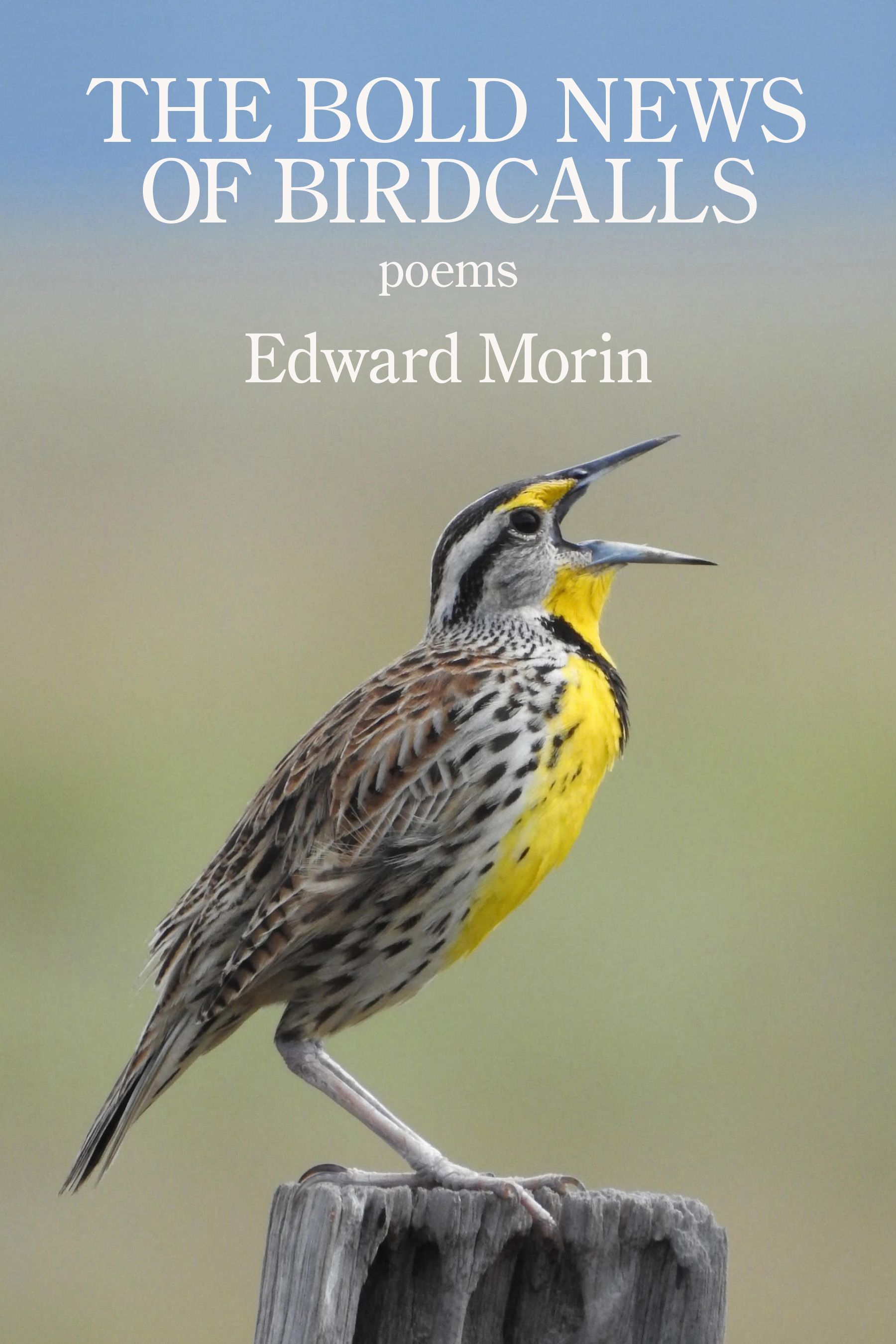 The meadowlark, belting his song from a post on this book’s cover, is recognized across the country as a harbinger of spring. Enlivening the ambiance of this poetry collection, familiar birds represent the character and mood of its four sections: noisy jays, melodious wrens, steadfast robins, tranquil swans. While birds populate many of the poems, hardly more than a handful have birds as their subjects. The poems’ subjects derive from wide ranging personal experiences often narrated as dramatic situations, usually with something emotionally important at stake. Settings are urban and rural, delineated in finely tuned sensuous detail. Some poems are sonorously lyrical, others ironic or assertive.
 Third Wednesday Magazine