 We Bury the Landscape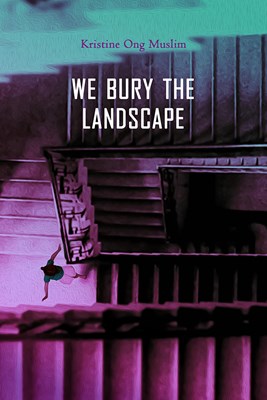
ISBN 978971542929-0
120 pages
Cover by Nadya Melina Nievera
Release date: October 25, 2020
Publisher: University of the Philippines Press
Click cover for link
“It isn’t everyday a book offers two very different ways of reading. The first: intensely personal, sometimes bewildering and yet rigorously demanding in terms of creative participation, and the second: intellectual, research-based and analytical, but also a call to a communal multi-genre artistic experience. These two different methods are on offer in Kristine Ong Muslim’s collection of micro fictions We Bury the Landscape, an assemblage of very short ekphrastic pieces.”
—Michelle Bailat-Jones in Necessary Fiction
“Although the relationship between painting and prose is certainly essential to fully experiencing this collection, the collection is more than an exhibition or exercise in ekphrasis … Muslim’s collection-exhibition chronicles the process in which the things we drown, discard, and bury are exhumed and continue to haunt us even after we have buried them again.”
—Hayes Moore in A cappella Zoo
“Conceptually, this is one of the most unusual books I have ever read. We Bury the Landscape, by Kristine Ong Muslim, is a collection of 100 mini-stories based on works of visual art—paintings for the most part, but also drawings, and one photograph …. The pieces themselves reflect the surrealism of the selection. They are flights of the imagination, untrammelled by pedantic considerations of plausibility. In effect, they are more in the nature of prose poems, where the language is every bit as important as the content.”
—Colman O Criodain in Gloom Cupboard
“It’s not the talking that is significant but the stories themselves that are important. We must accept the things we most want to query. All of which suggests that one strand of the weird invites us to reconsider entirely how we tell stories and how we understand them. I’ve been thinking about this every time I come back to Kristine Ong Muslim’s We Bury the Landscape.”
—Maureen Kincaid Speller in Weird Fiction Review
“[We Bury the Landscape is] filled with an uncanny wisdom about what terrifies us most in life and death—a knowledge so nonchalant and startling each poem proves only to reveal truths about each of us, about our humanity.”
—Susan Yount in Rebellious Magazine
Landscape with Grenade
after Cliff McReynolds’s Landscape with Hand Grenade / oil on panel, 1972
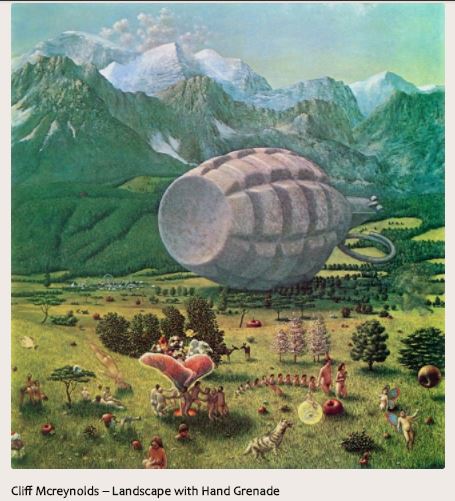 When the little people discovered the grenade on their valley, they did not know what it was so they prayed to it, tilled the land, and planted their tiny sacred crops around it as if it were some sort of shrine. Something so big and black with a curious contraption on one end had to beget miracles. So for months and months, they sang to it, asking for whatever it was little people desired in their little hearts. When nothing happened and because they were cowardly, they slit the throats of innocent animals in sacrifice. And when nothing happened still, they pelted the grenade with small stones. The grenade–god, of course, would not budge.
The Spider
after Odilon Redon’s The Crying Spider / charcoal, 1881
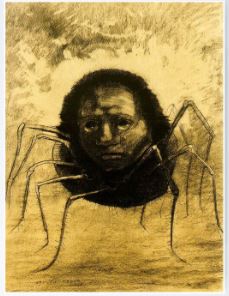 Your own family betrayed you the day they mistook you for a spider. Your mother caught you balancing a coffee mug on your fourth leg while sewing a button onto your coat with your two inborn hands. She told the family doctor you were “not quite right.” Another day, spying through the half-opened door, your kid brother watched you spin a web on the bedroom ceiling. Turning around, you lock eyes with him. He screamed. You didn’t get a chance to lick your achy joints and explain to him that it is normal to spin a web, to trap insects. Afterwards, your brother had to be sedated. For two years, he had the same bad dream. Your father, saddled since birth with pretending to be human, blamed you. When at last you had the sense to run away from home, nobody reported you missing. Your family must have assumed that anyone with eight legs must travel farther, go places no one else can. Most days, you wish that were the case.
Revenge of the Goldfish
after Sandy Skoglund’s Revenge of the Goldfish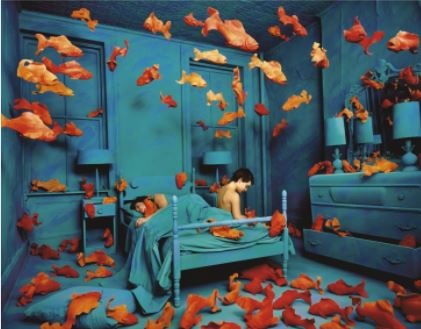 / art installation photograph, 1981
It started when my sister and I painted the bedroom walls an incestuous blue. At first, only two appeared, seeped through the walls. Goldfish. All fat lips and yellow-orange ugliness, squiggling as if they had the right to materialize. One landed near my sock drawer. The bigger of the two settled on top of the blue lamp. The fish wheezed as they died, waiting for water. It got worse each day. In a week, goldfish poured from the ceiling, the unadorned walls, the dresser mirror, under the blue bed. Hundreds. Their husks dropped on the floor. Even in our sleep, we could hear their gasps. We trod on their bodies as we dressed for work, back to the world that did not know what we had to endure inside this little room. We only collected them when we could no longer stand the smell, that pungent, moldy odor of decay. We talked of moving out, although by the time there was gurgling in the bathroom pipes, we knew it was too late.
 In a thrilling interconnected narrative, You’re in the Wrong Place presents characters reaching for transcendence from a place they cannot escape. Charles Baxter stated that “Joseph Harris has a particular feeling for the Detroit suburbs and the slightly stunted lives of the young people there…You’re in the Wrong Place isn’t uniformly downbeat-there are all sorts of rays of hope that gleam toward the end.”
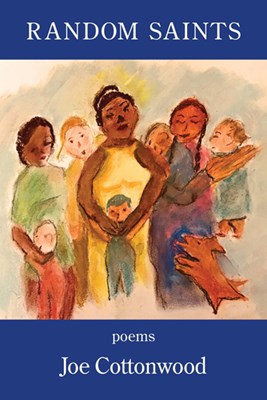 Random Saints
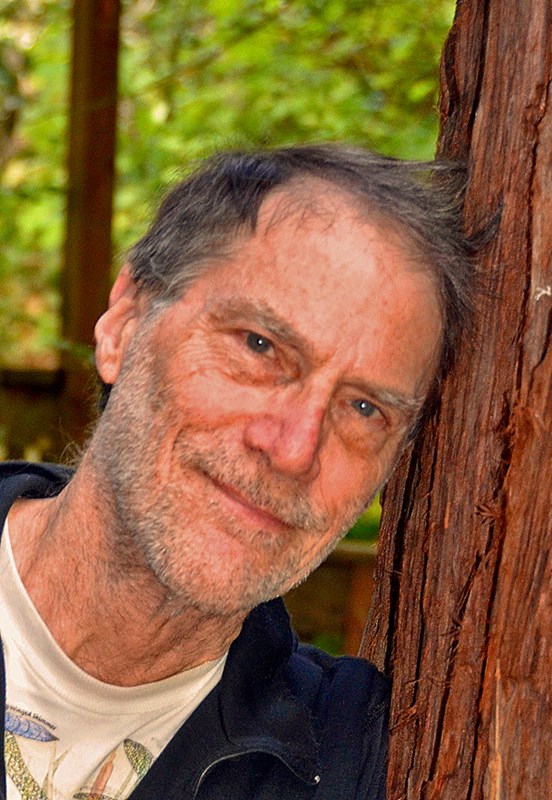 Joe Cottonwood

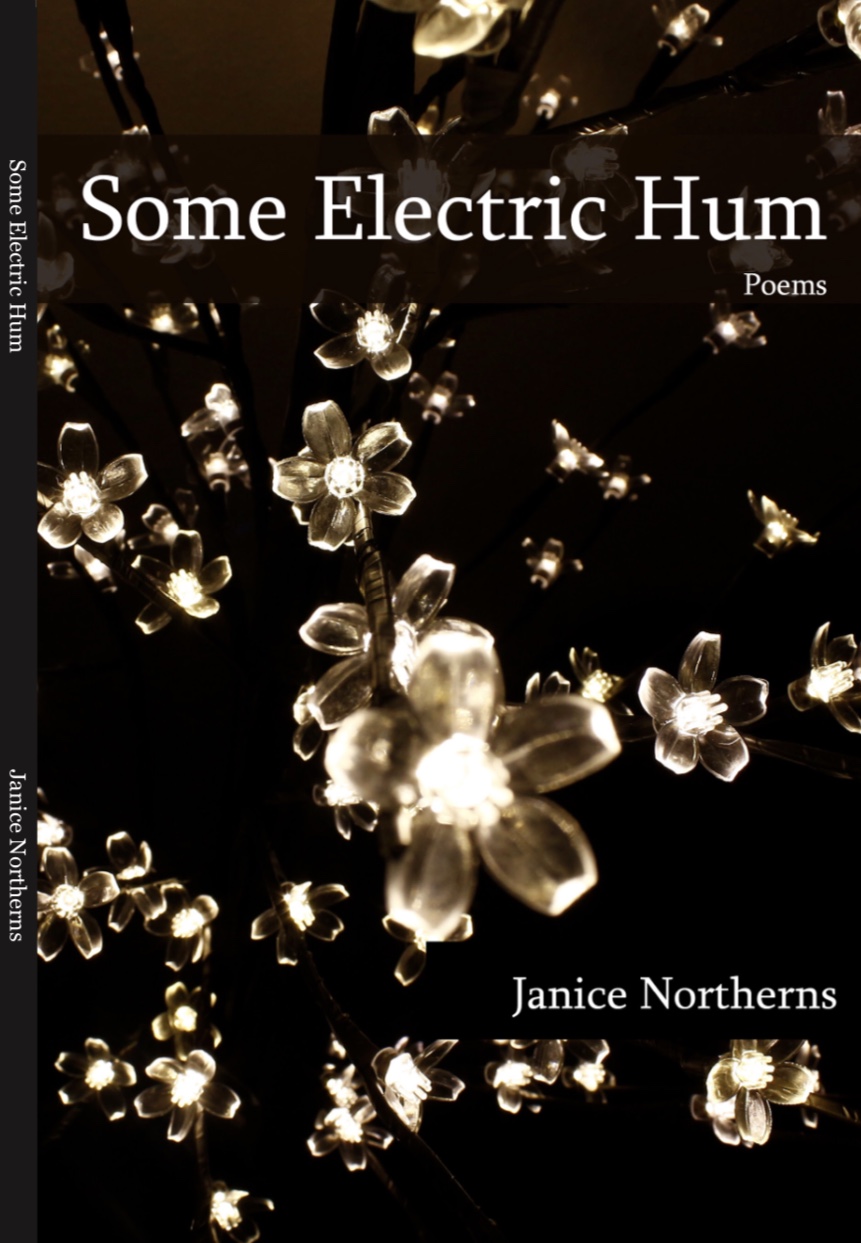 The poems in Some Electric Hum are set in Kansas and Texas and interrogate gender and social norms against the backdrop of a stark rural landscape. These brave and carefully crafted poems explore topics of coming of age, womanhood, immigration and human rights. With beautiful imagery and a clear voice, Some Electric Hum will appeal not only to lovers of poetry, but to all lovers of the written word.
 A native Texan now living in Kansas, Janice Northerns holds bachelor’s and master’s degrees from Texas Tech University. Her poems have appeared or are forthcoming in many journals