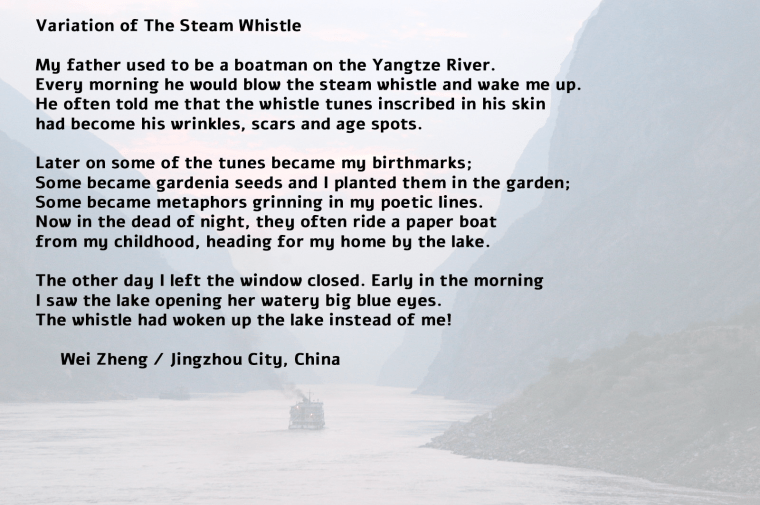
“Robert Lowes addresses with wit and compassion topics we recognize: the body’s betrayals, unfulfilled desires, nostalgia, loss. Lowes’s love of words is apparent in his masterful soundwork and the equal skill with which he depicts the delicate beauty of a butterfly or slams home a devastating judgment on our human failings. A wide-ranging cast of characters wanders through these poems: a woman who keeps chickens, a Neanderthal buying an ax, a man with a fresh haircut, God. An Honest Hunger opens to us a world that is humorous and deeply serious, filled with signs and wonders, mischief and memories, unanswerable questions and unexpected redemptions–our world, the whole, sweet ‘slapstick ballet.'”
–Marjorie Stelmach, author of Walking the Mist and Falter
“If more poets wrote like Robert Lowes, more people would read poetry. In An Honest Hunger, his debut collection, Lowes never holds the reader at a distance. Here, the poet speaks with straightforward intelligence and acumen–and a pitch-perfect natural friendliness–without a scintilla of sentimentality. And his imagery is sublime. . . . An Honest Hunger appeals to humanity’s better self and reminds us that we are united not so much by our strengths as by our woundedness.”
–Robert Nazarene, Editor-in-Chief, The American Journal of Poetry, author of Empire de la Mort
“In poems that range from elegiac to exuberant, Robert Lowes’s An Honest Hunger is a joyful dance with everyday life. It is a book full of faith and doubt, anger and suffering, but one still laugh-out-loud funny. Lowes’s hunger for God, for meaning in life, makes this book the one to read now, when this hunger is more universal and pressing than ever.”
–Jesse Lee Kercheval, author of America that island off the coast of France, professor of English at the University of Wisconsin-Madison.

 An Honest Hunger by Robert Lowes was published by Resource Publications, an imprint of Wipf & Stock Publishers, in April 2020. It’s avialable now from Amazon and Barnes and Noble.

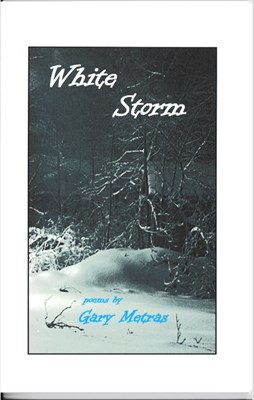
 Gary Metras’s new book of poetry is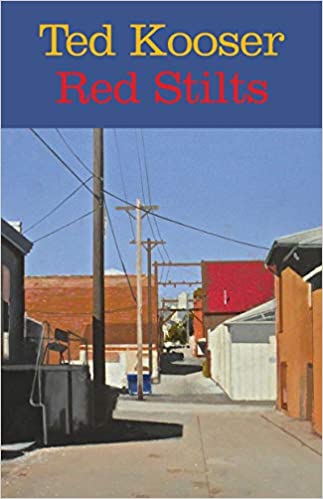
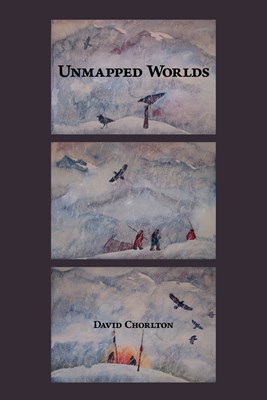 The Unmapped Worlds in this book extend from history to a way of life centered on European villages to the marginally surreal experience of our own times. The poems are previously uncollected ones enjoying their rediscovery. Whether through the visions of a medieval mystic or the routines that defined existence in a small town on the free world’s edge, David Chorlton reaches for what brought the mind to life in the course of living from day to day. The desert emerges as it appeared to early missionaries and conquerors in the Southwest and comes to bear multiple cultures today. Writing is a journey to the poet, and the work here follows some occasionally surprising side roads for Chorlton.

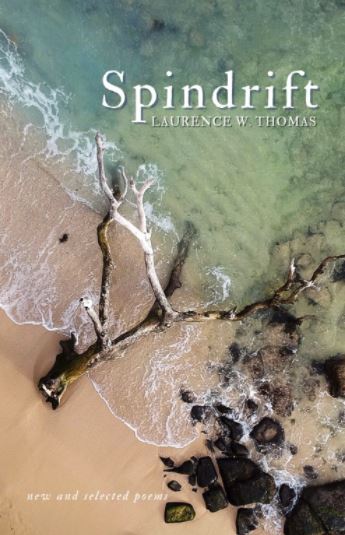 Spindrift suggests stuff blown onto beaches, beaches of discovery in one’s mind. When these poems show a squirrel, a fish, birds, a beggar, an Irish pub, or a dish we see these as metaphors which conjure up ideas or feelings from our own familiarity with them. A poem that begins as an abstraction, like an enemy or peace or patience, becomes objectified. Spindrift is comprised of whatever little gems might be found along the shore, examined closely to become part of the reader’s experience. These jottings of spindrift take off from that experience like going to an airport when you want to be someplace else – or like poems which say one thing when they mean another.
 Laurence W. Thomas is the founding editor of
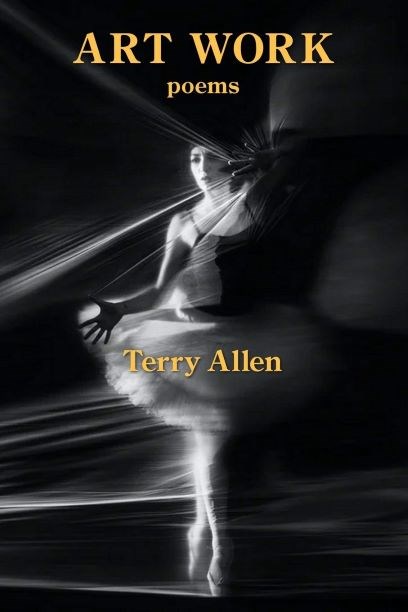 Art Work
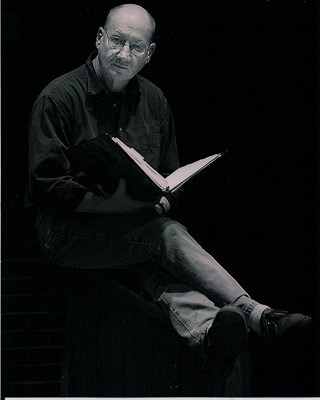 Terry Allen was born in Brisbane, Australia. He is emeritus professor at the University of Wisconsin-Eau Claire, where he taught theatre arts. His poems have appeared in numerous journals and he is the author of the chapbook, Monsters in the Rain. He lives in Columbia, Missouri with his wife Nancy.