“To the Domain” is a black and white photo by Fabrice Poussin. It’s one of 10 pieces of visual art in the Spring issue of 3rd Wednesday Magazine due out next week.
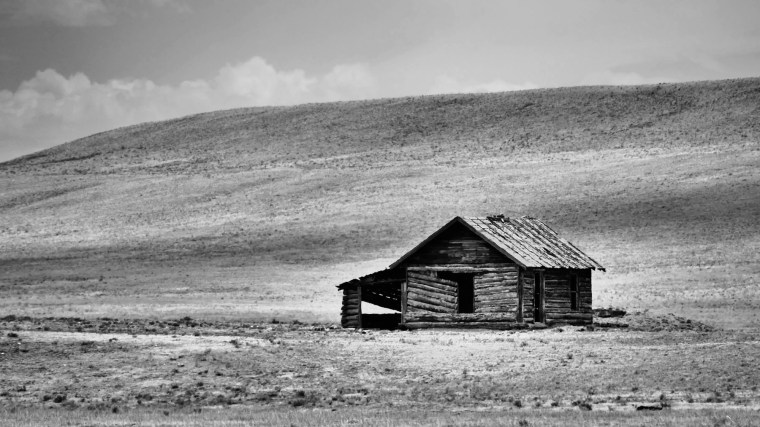
“To the Domain” is a black and white photo by Fabrice Poussin. It’s one of 10 pieces of visual art in the Spring issue of 3rd Wednesday Magazine due out next week.
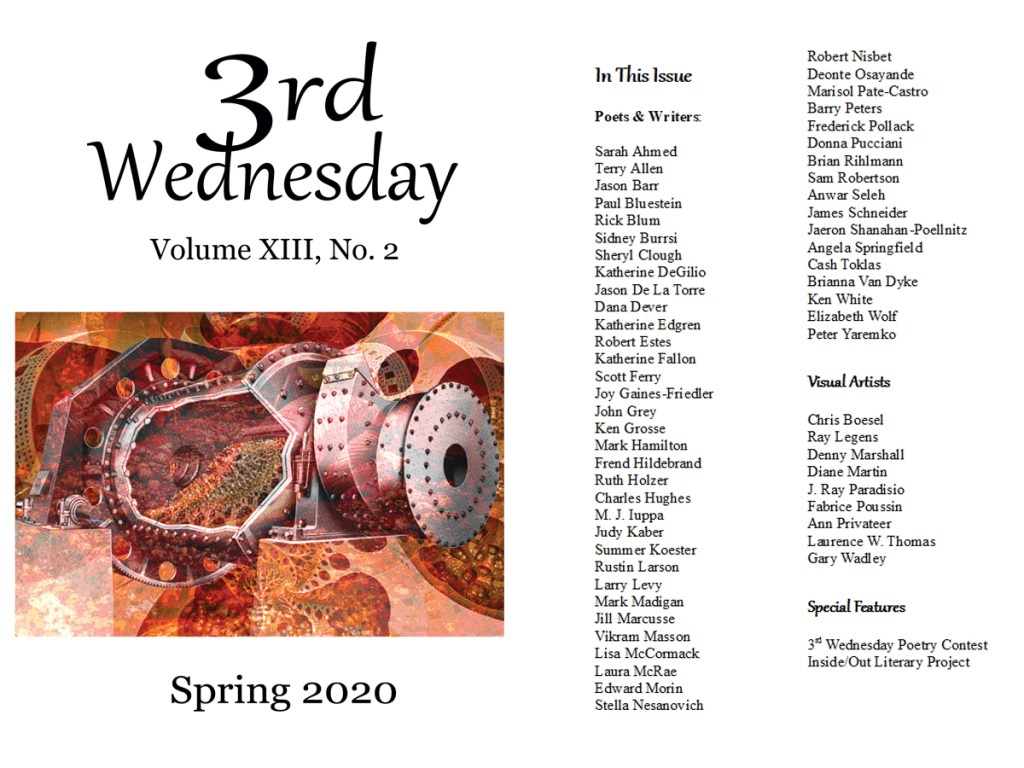
Volume XIII, No. 2 is coming soon…
3rd Wednesday Magazine’s “Poem of the Week” is actually two poems from The InsideOut Literary Project, each written by 3rd grade students from Dearborn, Michigan. You can learn more about the project at their website, https://insideoutdetroit.org/
These poems and others from I/O are featured in the Spring issue of 3rd Wednesday (due out near the end of March) as will the winners from our annual poetry contest.


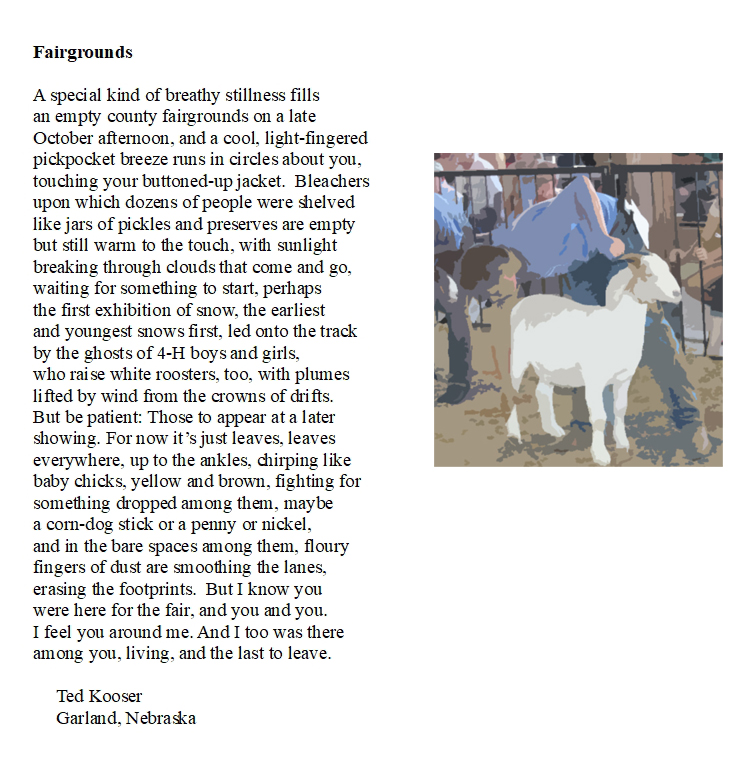
Our Poem of the Week was first published in fall 2018 issue of Third Wednesday. Here is Ted Kooser’s poem, Fairgounds.
For our 3rd Wednesday poem of the week we go back to 2015 and this jewel by our own associate editor, Marilyn Taylor. It has since had reprints in Poetry Magazine and at American Life in Poetry.
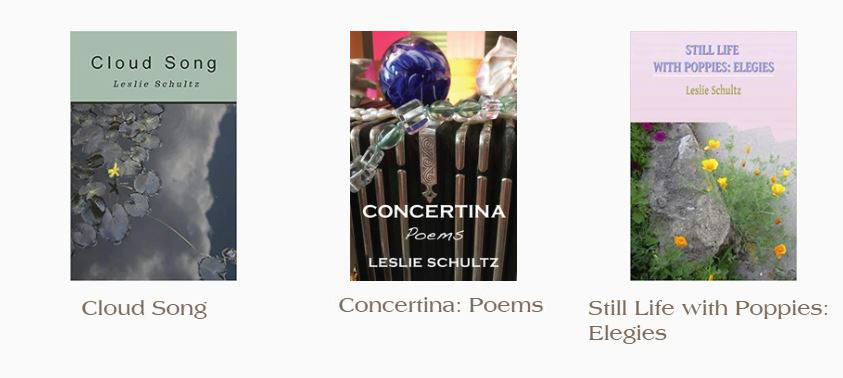
Available at Kelsay Books, Amazon & Content Bookstore in Northfield, Minnesota.
Leslie Schultz has been a frequent contributor to the pages of 3rd Wednesday Magazine.
Concertina
“Art sings a whole from a world in tatters,” writes poet Leslie Schultz in this remarkable collection. Schultz employs precise poetic forms to locate the “mineral music of our very bones.” The poems proclaim the material world – “the essential necessities… that make dreams real” – to celebrate poetry’s “ethereal alchemy.” Each poem creates a conversation between the poet and her many-layered audience. In “Open for Business,” the writer tells her father, “I’m still listening.” The poet’s voice here is accomplished, formal, witty, strange, and listening hard: to family stories, to nature’s notes, to the rooms of her house, to days “distinct with wonder.” In “Taproot,” a “crown” of 18 sonnets for and about Schultz’s great-great grandfather, each sonnet begins with the last line of the prior sonnet and transforms it to reshape the story. One sonnet turns an assertion to a question: “Can I build as lightly as birds/word shelters for the living and the dead?” This collection says yes. — Susan Jaret McKinstry
Cloud Song
In Cloud Song, Leslie Schultz is a master gardener. The beauty and abundance of her poetry springs from both a generous nature and a cultivated sensibility. Like the couple in her delightful character study “Gilbert’s Hobby,” she tends the “rampant garden” of free verse and the carefully shaped bonsai of formal verse with equal attention and skill. Her poetic garden is filled with sunlight and color and changing weather. What she offers is not an untouched Eden, but a real world populated by deftly-drawn characters existing in various states of fallen grace, a place where the poet’s attention always wanders from ideas of order toward the real beauty of the ephemeral: “sun slipping/behind the western trees, fish/tumbling in sparkles over the dam,/this garden in riots of color and seed.” — Rob Hardy
Still Life with Poppies: Elegies
Still Life with Poppies: Elegies by Leslie Schultz is what the name implies: bright joy against a sorrowful landscape. Death is everywhere in the world Schultz writes about—its relentlessness, its creativity, its suicidal call. Yet life in all of its various forms continues—some beautiful, some not. Cruelty may show its aftereffects for generations; a harsh set of comments may freeze creativity, at least for a time. While many may become cynical or depressed as a result, Schultz perseveres. Her poems about myth, in particular, are standouts. Schultz also understands in a profound way that the most emotional personal moments are mythical: emblemized by something as simple as plastic fruit in a blue bowl, or as iconic as a childhood home. For the depth of this understanding alone, you should read this book. — Kim Bridgford
 Leslie Schultz’s poetry has appeared in Able Muse, Blue Unicorn Journal, Light, Mezzo Cammin, Swamp Lily Review, Poetic Strokes Anthology, Third Wednesday, The Madison Review, The Midwest Quarterly, The Orchards Poetry Journal, and The Wayfarer; in the sidewalks of Northfield; and in a chapbook, Living Room (Midwestern Writers’ Publishing House). She received a Pushcart Prize nomination in 2017 and has twice had winning poems in the Maria W. Faust sonnet contest (2013, 2016). Schultz posts poems, photographs, and essays on her website: www.winonamedia.net.
Watch a video of Leslie reading on 3rd Wednesday’s YouTube channel.
Sarah Russell’s poem was an entry and $100 winner in 3rd Wednesday’s recent One Sentence Poetry Contest. When we wrote to notify her, we told her that her’s was one of the worst run-on sentences we’ve ever seen, but that it served this prose poem perfectly.

These poems are of a seer – unwrapping time, being, the Change we are igniting. The considerations are hard won- who we are, what is coming upon us in this age, the passage we are entering and the exit -the seer knows it. There are no exhortations, no longings for forecasts, only the seeing and the forthcoming Being that envelopes us more and more “until all that is left of us” . We need this wisdom book, clear elixirs from the Source. True mind-beauty, caved with humanity – beam, everyone must touch this volume in order to traverse the present age, Bravissimo.
Juan Herrera: 21st Poet Laureate of the United States
In “Prime Meridian,” Connie Post’s daring new collection, she writes to “identify/the noises of departure”—those of land engulfed by natural disaster, of family dissolution by abuse, of retreats to safety in the face of suffering. More importantly, these poems teach us conservation: “we find graceful ways/to slides out of a room/step over a fractured equator/“—holding things dear in the face of such violation. Remedies come in language: the grammar of ritual, ceremony, and resistance. This is a poetry of incantation against the darkest and most secret types of human depredation and hymns of recovery—all spoken in assured and inventive measure. Connie Post’s strength is her unflinching and virtuous language to redeem a moment or a life.
Maxine Chernoff: Author of Under the Music: Collected Prose Poems, MadHat Press

“I have been on fire / since the moment I walked / through this door.” Thus begins one of the many burning poems in Connie Post’s Prime Meridian. In fact, the work in this book is so good it is as though Post herself has been on fire since she walked through the door of poetry. In poems both personal and political, Post manages to connect physical and geological ailments by way of her spare but unsparing lyrics. This is an important collection everyone should be reading.
Dean Rader: Author of Self-Portrait as Wikipedia Entry (Copper Canyon Press 2017) and editor of Bullets into Bells: Poets and Citizens Respond to Gun Violence
Purchase from Glass Lyre Press
Purchase From Amazon
Purchase from Barnes & Noble
From 3rd Wednesday, Fall 2018:

Here is 3rd Wednesday’s poem of the week from the Winter Issue. In his cover letter David wrote: “I’m happy to see print magazines continue in the digital age, as I prefer to hold my reading matter in my hands than to look at a screen! I write because doing so hasn’t lost its meaning to me, and because I feel I’m in good company among (most) others who write.“
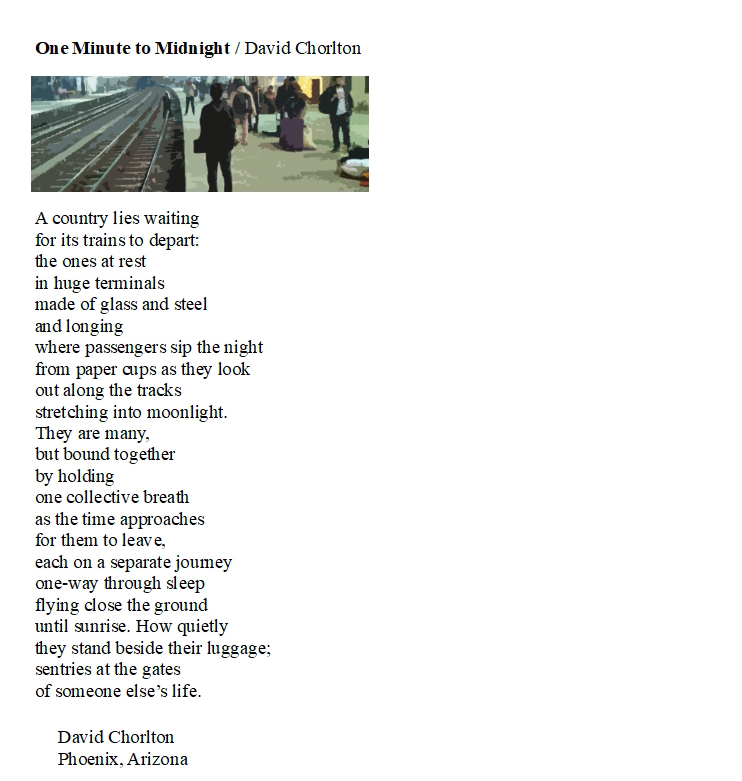
Third Wednesday’s Poem of the Week is from the Winter 2020 issue which just went into the mail to subscribers and contributors. It’s available in print at Amazon and you can read it for free online by clicking Free Issues at our website.
 Third Wednesday Magazine