The Lady Working in a Grocery Store / Danielle Ellis
by David August
A loud noise woke her up, and he woke with her. He could see what she saw: a dirty tent, the mat on the ground where she had been sleeping. He could feel everything she felt, and at that moment, it was mostly fear. People were shouting nearby, their voices filled with despair. One of them cried out her name.
Another terrible noise shook the ground. The bright light temporarily blinded her, so he couldn’t see either. When she opened her eyes again, there was fire everywhere. He choked on the smoke along with her as she struggled to find a way out. But the tent was made of cheap plastic; once it caught fire, there was no escape.
Now, he was stumbling barefoot through the debris, dragging a bucket and searching for water. He laughed at something one of his friends did, and before long, they were all laughing. Distracted as he was, he didn’t noticed the sniper aiming at them from a distance. A precise shot to the head killed him on the spot. The other presence, still confined to his body, had to stay there until the next jump.
Before he knew it, he was on a beach, walking fast and trying to keep up with his father and uncle. A few paces ahead, his father glanced back and yelled, “Hurry up!” His words had barely left his mouth when he vanished into a cloud of smoke and sand.
The blast knocked him down, but he quickly got up and started running. Survival instinct was the only thing driving him forward. His mind had yet to process what had just happened or register his injuries.
He didn’t pause to check if his father was with him, never doubting that he was. But the silent witness inside him, connected to every sensation, knew otherwise. As an experienced veteran, he could identify the drone hunting them down without looking at it. He knew exactly how many seconds it would take to adjust the targeting system for the final strike. He was not wrong.
More final moments kept coming. Being operated on without anesthesia and not surviving. The roof collapsing after the building was hit by a missile. Another sniper shot. Another bombardment. Then another, and another, and another. He couldn’t shut himself off from any of them. He had been able to before, but now it was impossible.
At last, the commander made it back to his hospital bed. He had lost count of how many times this had happened, though he still remembered how terrified he had been when he first arrived. Cancer had finally caught up with him, the one enemy he had never been able to eliminate. Now, however, returning to this sterile room was a relief. It was the only place where he could be himself and face death alone.
A man in uniform was sitting on the couch near the bed. In a feeble voice, the patient asked, “How many more?” The lower-ranking officer stood up quickly and said, “Sorry, General, what did you say?”
“In that last campaign, how many?” the sick man said with difficulty. “How many children did my division kill?”
The other man, who happened to be the general’s nephew, went from looking worried to looking embarrassed. In a soothing tone, he said, “Don’t think about that now. You should try to rest.”
The general narrowed his eyes and demanded, as forcefully as he could, “How many?”
His voice lacked any hint of his former authority. It was only his nephew’s desire to prevent the ailing man from overexerting himself that prompted him to say, “There were twenty unfortunate victims. All accidents, of course.”
“Not the official number, damn it,” the general said. “The real one.”
The junior officer chose to ignore the question. As he turned to sit down again, his uncle grabbed his hand. “How many?” the general insisted, refusing to let go despite having no strength left.
With the utmost reluctance, his nephew replied, “Five thousand.” It was not the correct number – he couldn’t bring himself to say that – but rather a modest estimate.
“Five thousand,” the dying man repeated, bracing himself for another jump. “Five. So … maybe four. Maybe four thousand to go.”
David August lives in São Paulo, Brazil, and works in human rights advocacy. His stories have appeared in 3:AM Magazine, Bright Flash Literary Review, and The Rumen, among others.
Centerpoint
After checking Facebook, Instagram, and Tiktok for the 200th time that morning, she decided she needed that new miracle drug. Ozemplic for the brain. She needed to take control.
Yes, the injection started out as a cure-all for another terrible disease: obesity, which was a detour from the original intention to treat diabetes. But researchers had discovered that it also curbed one’s use of the Internet by taking away all interest, as it were, slacking the appetite. The addiction to constantly checking, then after checking the endless scrolling, the doom-scrolling where one sucks up all the bad news like a vacuum cleaner in a black hole. The obsessive looking at the screen of her phone, actually not letting go to put it down, holding it as if it were a talisman against . . . What?
She didn’t know, but she would Google right away. What am I afraid of?
Sometimes, late at night, she’d awake or—more often than not—she’d been unable to fall asleep—and type into her Kindle Fire by the bedside: Tell me the future. Once she asked the universe, more specifically: What is that blurry thing off in the distance that looks like trees waving in the wind? And the ChatGPT came up with an answer: You’re off your rocker.
That’s how it felt. Askew. Does anyone ever use that word anymore? Yes, bounced the bot. 9006884 times a day.
It was her phone that recommended Ozemplic.
The rectangle dinged one morning, and she jumped out of the shower to see a message. She quickly toweled off and sat on the couch wrapped up with nothing else on, rivulets streaming from her head and onto the device screen. Finally someone cared enough to reach out and help. Or something. Never mind.
When did it start? Was it after the unexpected passing of her mother at only age 54? One day she was great, the next she was in the emergency room, and two weeks later dead. Didn’t the universe know that even though she—a college graduate in an only okay job but more importantly with health benefits—perceive that she still needed support. To be able to call her mother up and complain. If her mom called her, she’d complain that she was calling. “I need space, Mom,” she’d say. Well, guess what! She got space and so much more. Loneliness. Now no one calls.
Not even her brother, who disappointed the relatives and her biological father by coming out trans and wearing a dress to the graveside service. He’s got his own fish to fry (according to Grandpa). Her family was too busy with their own stuff to ask what’s up with her. She was considering getting a rescue cat, except she was allergic to fur.
This drug was her chance to get back her life, seize agency, move forward. Despite the side effects.
Dry mouth.
Dry eyes.
Dry vagina. (Oops, maybe this one, but no—there were creams to fix that)
Dry heaves.
Weight loss.
Loss of interest.
Love loss.
Lost (the TV series)
Streaming.
Stream of consciousness.
This was a partial list. She made an appointment
………………………………………………………………………………………………………………………………………………………..
No longer storming out of the shower to the sound of her phone, no longer binging on social media, she was dry. Empty. Her days devoid. From, you name it. Packages of Perfectly Pickled Pups from Trader Joe’s, bread rolls with flakey salt, take out from Ms. Egg Roll. The freezer and coffee table were wiped clean.
The desire for coffee suddenly diminished. She lost the remote for the TV. No more Lost.
Her mornings were a blank slate with only the sun peeking, peeping, creeping across the length of the floor. Toward the bonsai garden, where she daily rakes the tiny pebbles with a miniature rake. Her Word-a-Day calendar introduces palimpsest. A manuscript or piece of writing material on which the original writing has been effaced to make room for later writing but of which traces remain. Truth, she thinks. There are traces, but, at the same time, room for new. She ruminates, Life is every bit like this. Palimpsest.
There’s the morning walk to her car which she never noticed before. The birds that gather in a tree adjoining the bank parking lot. The tree itself, changing according to the seasons. She remarked to the new guy at work, the one glued to his phone in the break room, that the tree was aflame with autumn gold. And he said, What tree?
But later, after work, they both stood in the parking lot and watched the leaves dance the mazurka in the evening breeze. And, even later that month, they drove to the forest preserve with lawn chairs to catch a late afternoon symphony.
Nothing happened. Nothing at all.
…………………………………………………………………………………………………………………………………………………………………………
Jane Hertenstein is a Pushcart nominee whose work has been recognized by the New York Times. She is the author of over 100 published stories both macro and micro: fiction, creative non-fiction, and blurred genre. In addition she has published two MG novels and a non-fiction project, Orphan Girl: The Memoir of a Chicago Bag Lady, which garnered national reviews. Jane is the recipient of a grant from the Illinois Arts Council. She teaches a workshop on Flash Memoir.
The 2025 George Dila Memorial Flash Fiction Contest will open for entries on May 15 and close on August 15, 2025.
The editors of Third Wednesday are pleased to honor the memory of George Dila, friend of Third Wednesday and the editor who originally brought fiction to 3W. We are proud to have called him friend and colleague. To this end, we proudly announce the Annual George Dila Memorial Flash Fiction Contest.
The entry fee of $6 per story is payable via credit card or by Pay Pal through Submittable at the time of your submission. You may enter multiple stories but include only one story per entry.
From May 15th to August 15th, 2025 we will accept entries of previously unpublished fiction under one thousand words in length (including title). Three winning stories will receive cash prizes of $100 each and a print copy of the contest issue due to be published in September of 2025.
 Colleen Alles is a writer, former librarian & teacher, and Michigan girl for life. She earned her bachelor’s degree in English from Michigan State University (2005) and her MLIS from Wayne State University (2015). Her fiction and poetry have appeared in Red Cedar Review, Tar River Poetry, The Write Michigan Anthology, The Michigan Poet, and other places. Her fiction has been longlisted for The Fugere Book Prize for Finely Crafted Novellas in 2023 (Regal House Publishing). Colleen is co-editor for fiction with Barren Magazine and is currently pursuing her MFA at Spalding University. Her house is chaotic with young children and a hound, so don’t be shocked to encounter poems about chaotic houses, small children, or hounds.
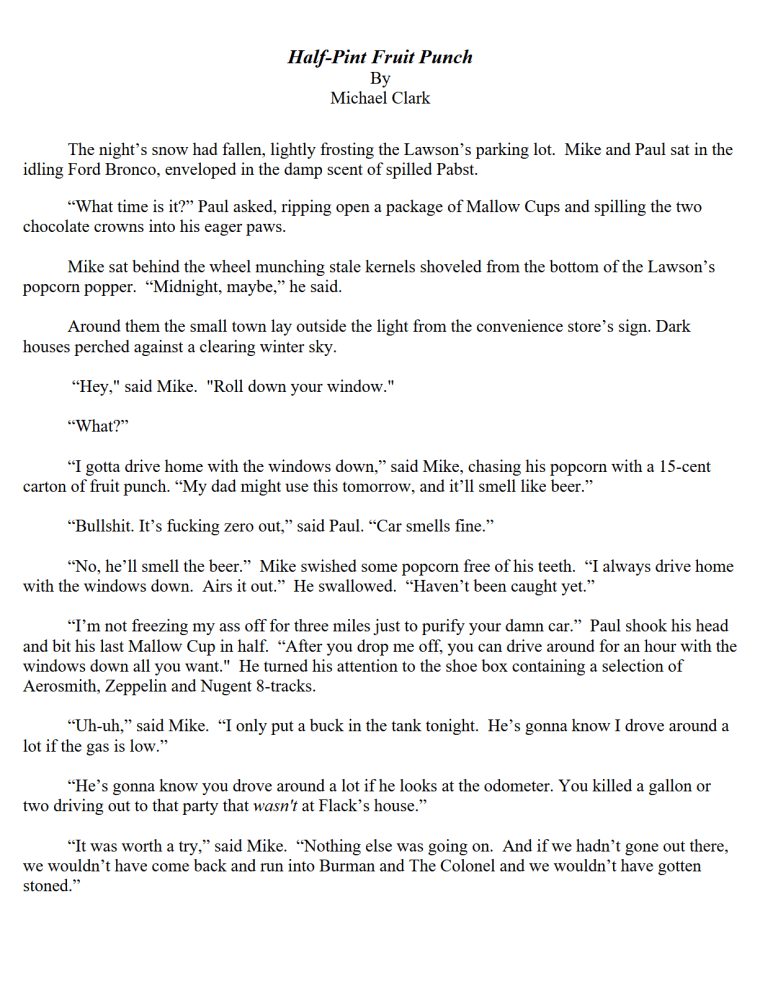
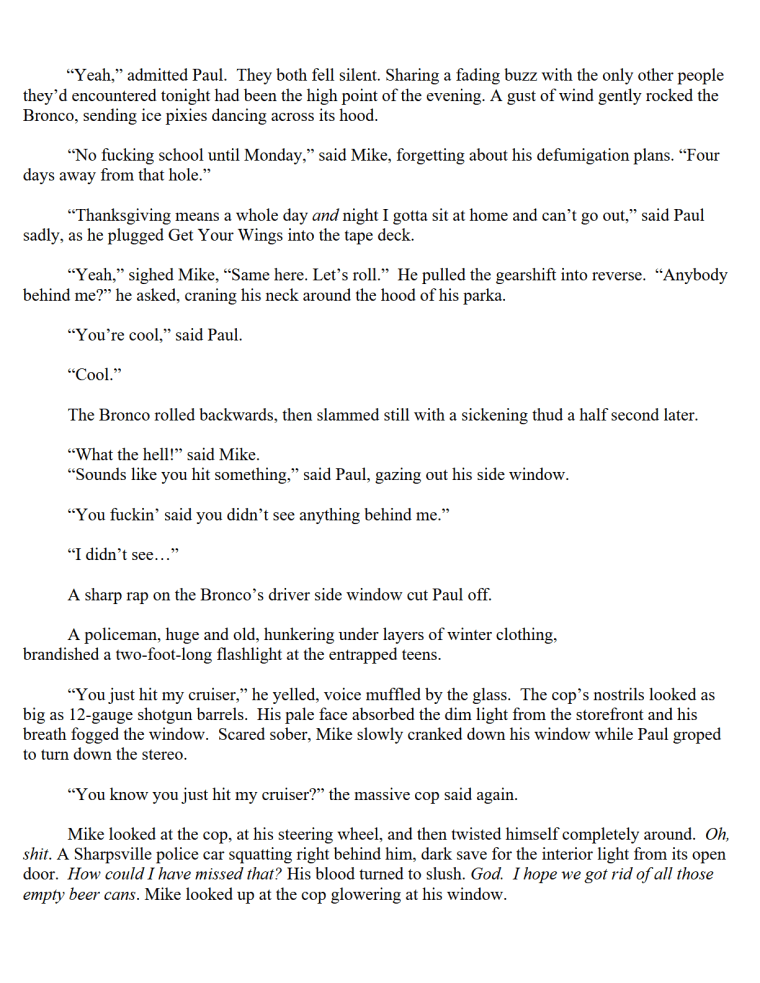
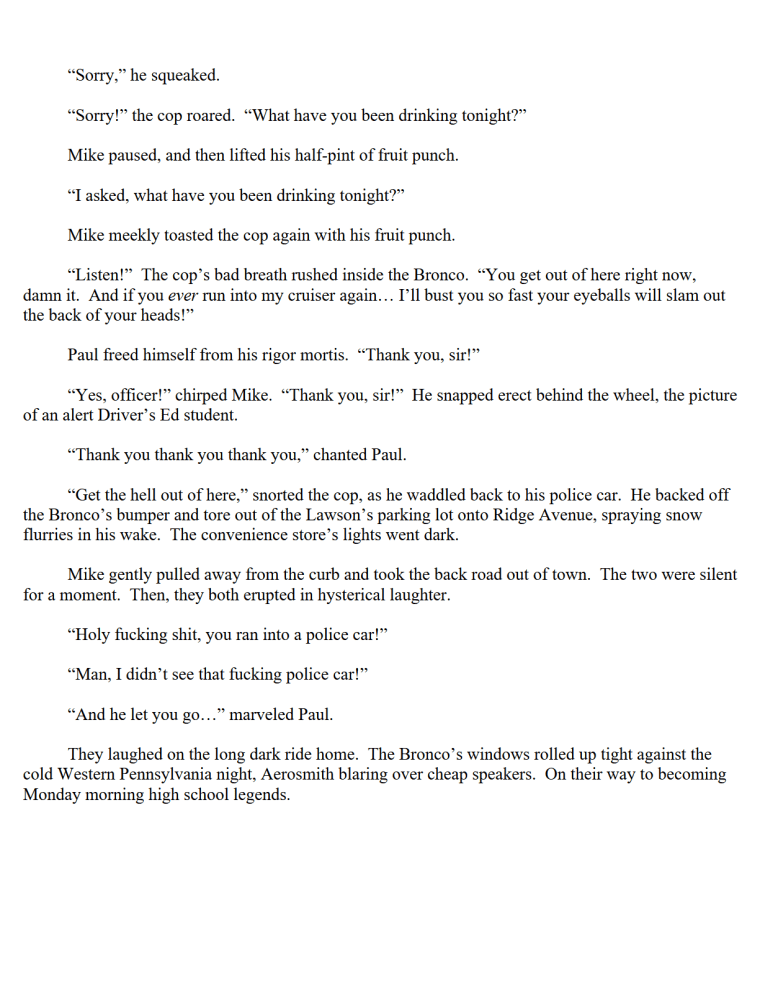
Michael A. Clark’s novella “Are One” has recently been published by Water Dragon Publishing, and his short story, “The Final Shot” appears at https://whitecatpublications.com/2024/04/09/the-final-shot/. “I, Cro-Mag” is in the current issue of Electric Spec.
Clark lives in Charlotte, NC, and currently works in industrial automation while spending as much time as he can outdoors. He likes baseball and writes short stories and music because that’s what he does.
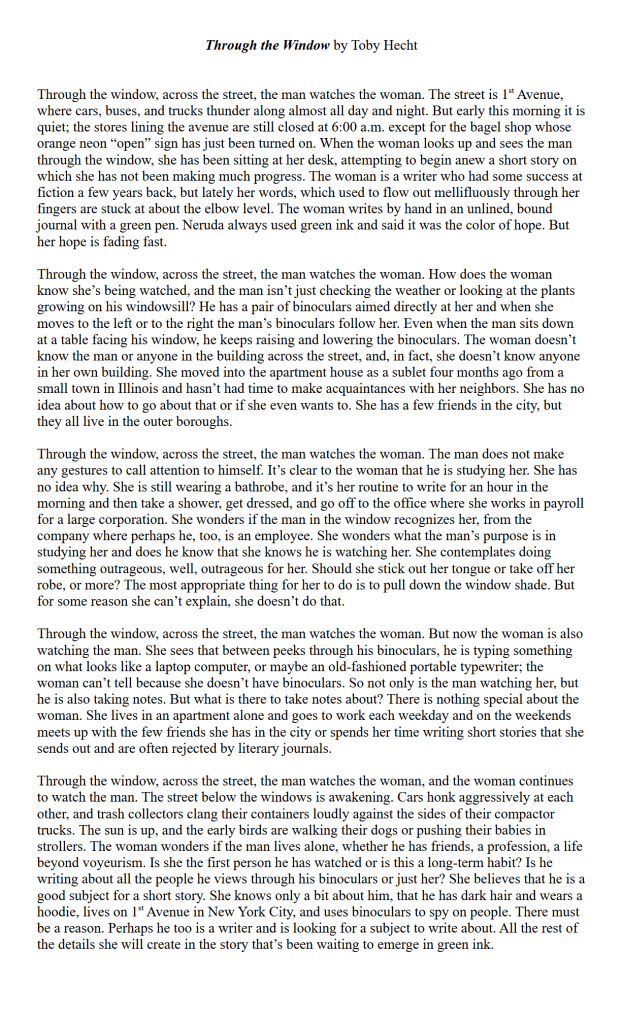
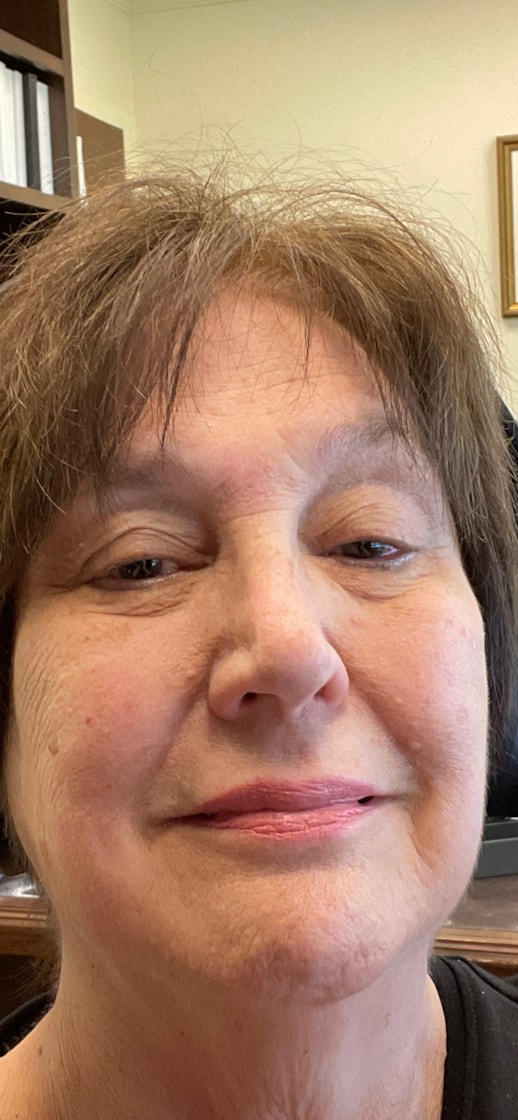 Toby Tucker Hecht is a writer and scientist who lives and works in Bethesda, Maryland. At least forty of her stories have been published either in print or in online literary journals. A native New Yorker with a rather traditional life, she writes fiction to explore more exciting lives than her own. She is now working on a collection of short stories, and a series of linked short stories.
 Neil Jacobs’ thirty-year career as a psychologist working with leaders, teams, and organizations causes him to reflect daily on the complexity of the human condition. He carries this into his writing. Neil’s evolution as a writer has been informed by workshops at the Fine Art Works Center in Provincetown, MA under the tutelage of authors such as Garrard Conley and Mira Jacob, and writing courses at Grub Street in Boston. He recently finished his first novel, a family saga between two sets of neighbors set in the North of England.
Shawn Yager is an educator who lives in the Monadnock Region of southwestern New Hampshire. He has previously published flash, short stories, and poems both online and in print. He considers himself a “pantser” who tries to write rough drafts as spontaneously as possible. Of course, this produces many false-starts and much hair-pulling.
 Third Wednesday Magazine