From Finishing Line Press
The Cottage – by Laurence W. Thomas

We all have a dream, an idea of heaven on earth. For Laurence Thomas the dream is of a simple idyllic life in a cabin in the woods or on a lake. In The Cottage Thomas lives out his dream through his poems and we get to live the dream with him. The poems are written with sensitivity and a special devotion to detail. The tranquil mood is reminiscent of the prose of Walden or the poetry of Gary Snyder or Wendell Berry but with Thomas’ own individual style and ear and eye for the sublime. These are poems for a rainy Saturday, poems to be read slowly and savored like perfectly aged wine, hopefully on the porch of your own cottage, real or imagined.
–David Jibson, Editor of Third Wednesday, a literary arts journal
Thomas, I think, isn’t totally honest in this chapbook. Maybe even subversive, which is in his nature and part of his charm. On the surface he takes you to a cabin by the lakeside, opening the door to nostalgia like Yeats does in “Innisfree,” walking the paths through mushrooms, listening to the sermons of maples and Virginia creeper, rowing in the moonlight, celebrating Halloween with the lake’s residents. He claims that cabin life carries him “away to places in the mind not possible to find in reality,” a theme echoed in “A Morning Walk Shows Changes” when he writes, “[O]n the breeze is a hint / of excitement as if just around the bend / or at the water’s edge I’ll find / some treasure . . . .” Look deeper though, with the artist’s eye, the poet’s eye, and you’ll find the treasures taking different forms. Quietly, sneakily, Thomas seems to be writing about poetry in a grand and disguised metaphor. He leaves footprints for you to follow in the soft lakeside landscapes that lead to valuable and hospitable moments: “Everyone is invited to visit me here and take a dip into these refreshing waters.” You can dip into the beauty that surrounds a fishing cabin, a lake, and its environs or a dip into the pleasures of word and image and craft. Thomas invites to both.
–Mark Tappmeyer, Professor of English (ret.) Southwestern Baptist University, Bolivar, Missouri
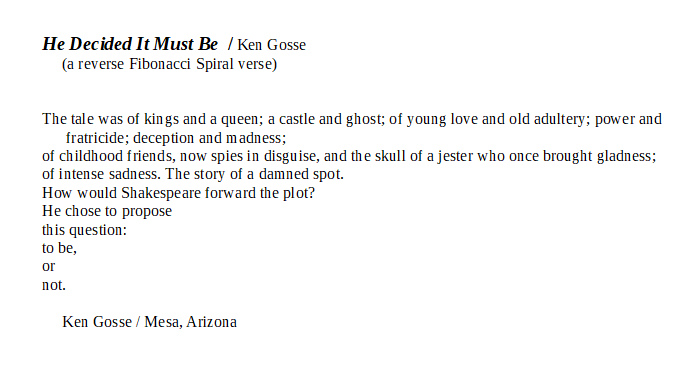





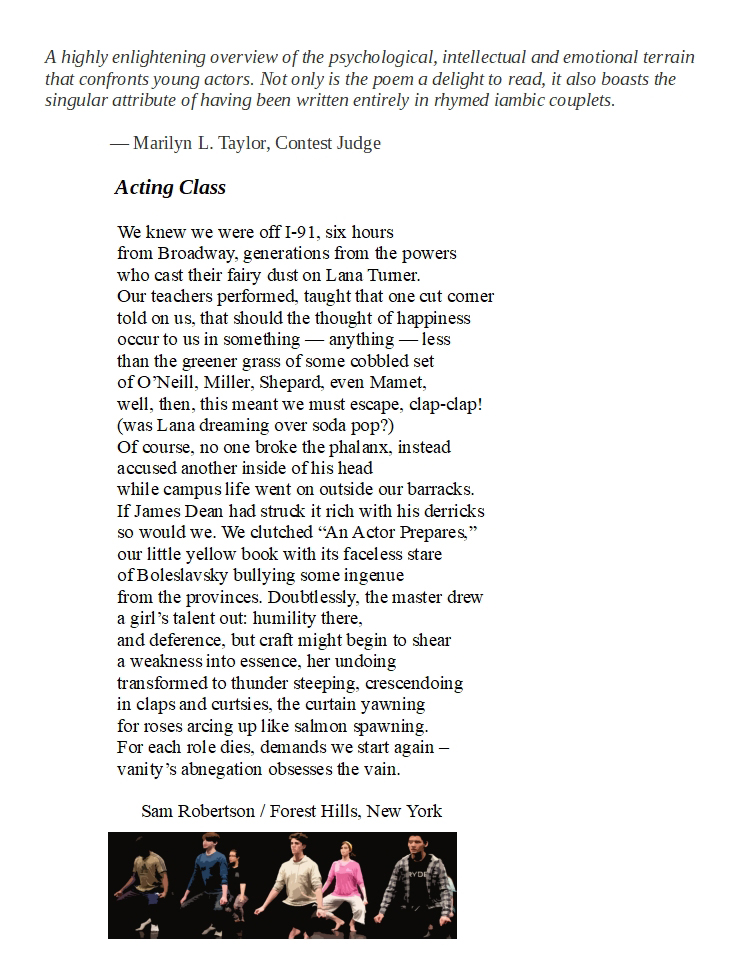
 Contributor and Subscriber copies of the Spring issue of 3rd Wednesday are in the mail. This issue features the winning poems and honorable mentions from our annual poetry contest, judged this year by Marilyn L. Taylor. Dr. Taylor is a teacher and well-published poet with 8 poetry collections to her credit. She was poet laureate of The State of Wisconsin (2009-10).
